 ultimate-guide
Best Wood for Handmade Serving Trays
Table of Contents
- What Makes the Best Wood for Handmade Serving Trays
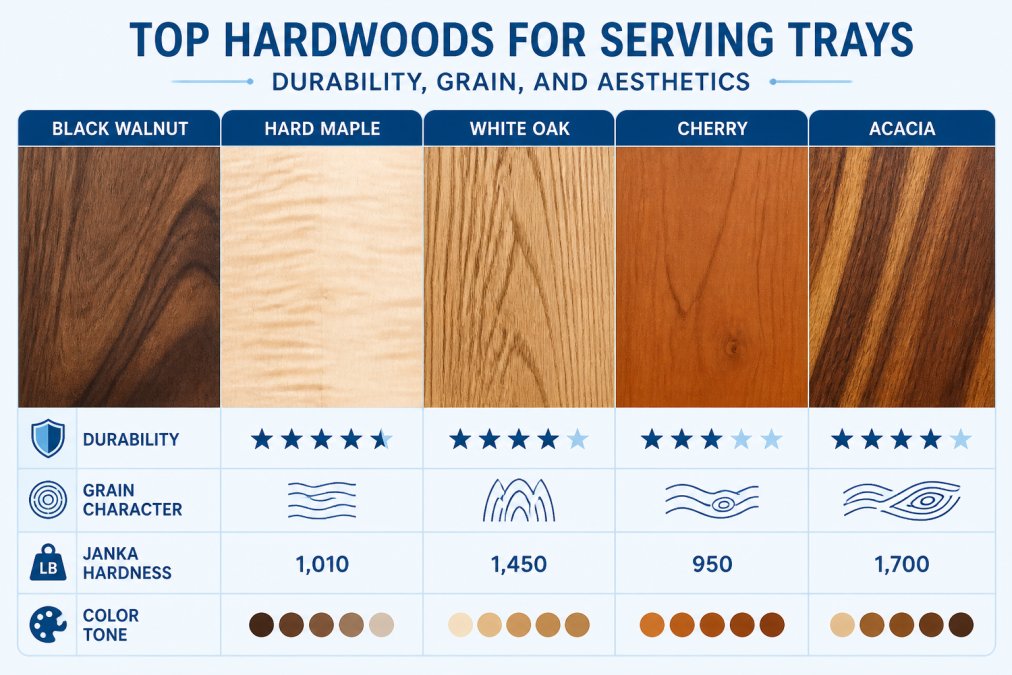
- Top Hardwoods for Serving Trays: Durability, Grain, and Aesthetics
- Food Safe Wood Finishes for Serving Trays
- End-Grain vs. Edge-Grain Construction
- Woodworking Tools for Serving Trays
- Caring for Wooden Serving Platters
- Woods to Avoid for Food Contact
- Conclusion
Last Updated: August 15, 2026
What Makes the Best Wood for Handmade Serving Trays
Selecting the best wood for handmade serving trays affects durability, aesthetics, and food safety for years to come. The right choice balances three critical factors: dimensional stability (resistance to warping and cracking), grain aesthetics that age well, and compatibility with food-safe finishes.
At Pinnacle Woodcraft, LLC, we've spent years understanding which woods truly deliver on both beauty and function. The wood you choose determines how your tray performs after five years of use. A poorly selected species might cup or crack; the right one becomes better with age, developing a patina that tells the story of every gathering it graces.
Top Hardwoods for Serving Trays: Durability, Grain, and Aesthetics
Not all hardwoods work equally well for serving trays. The species that excel combine workability with genuine durability and visual appeal that improves over time.
Black Walnut: Rich Color and Dimensional Stability
Black walnut stands out for its deep, luxurious brown color and grain patterns that create visual depth. Its exceptional dimensional stability resists warping even in thinner panels. The wood sands cleanly, takes finishes beautifully, and develops a deeper, richer tone over time with proper care. Walnut is more expensive and harder on tools than softer species, but the investment pays dividends in a piece that outlasts trends.
Hard Maple: Durability and Modern Appeal
Hard maple delivers a clean, contemporary aesthetic with pale cream color and subtle, tight grain. Its real advantage is durability, it resists abrasion and knife marks better than almost any other option and holds its shape exceptionally well, even in dry environments. The tight grain doesn't impart flavors to food and resists blotching when finished. Its hardness makes it challenging to work with, but for a tray needing to maintain its appearance for years, hard maple is difficult to beat.
White Oak: Moisture Resistance for Everyday Use
White oak brings a classic, timeless aesthetic with light brown color and straight grain. It's exceptionally resistant to moisture, making it ideal for serving trays where drinks will sweat and condensation occurs. The wood is strong, dense, and resists denting while holding its shape well. It develops subtle character with age without becoming visibly weathered. The downside is weight, white oak's density means larger trays are noticeably heavier, and it requires more effort to work with.
Cherry: Warmth and Aging Character
Cherry offers a moderately hard wood with a beautiful reddish-brown hue that deepens significantly over time. The fine, smooth grain adds elegance, and it's easier to work with than maple or oak, making it more accessible for custom projects. Cherry is more susceptible to scratches than harder woods and its color varies between pieces, but many prefer this natural variation for authenticity and character.
Acacia: Distinctive Grain and Affordability
Acacia delivers distinctive grain patterns with warm, honey-colored hues that make each piece unique. It's durable and naturally resistant to water, valuable for a serving tray encountering moisture regularly. The real advantage is accessibility, acacia is more affordable than walnut or cherry, and each piece has genuinely unique grain. It can be prone to scratching without proper care, but it offers durability, character, and value.
| Wood Species | Grain Character | Moisture Resistance | Workability | Best For |
|---|---|---|---|---|
| Black Walnut | Deep, luxurious patterns | Moderate | Moderate | Elegant, heirloom pieces |
| Hard Maple | Tight, subtle grain | Moderate | Challenging | Modern, high-use trays |
| White Oak | Straight, classic grain | Excellent | Challenging | Everyday use, drinks |
| Cherry | Fine, smooth grain | Moderate | Easy | Warm aesthetic, aging |
| Acacia | Distinctive, unique patterns | Good | Moderate | Budget-conscious, character |
Food Safe Wood Finishes for Serving Trays
The finish protecting your wood determines whether your tray is genuinely food-safe and how long it maintains its appearance and protection.
Penetrating oils like food-grade mineral oil, walnut oil, or specialized blends (such as Walrus Oil Cutting Board Oil, which combines coconut oil, mineral oil, vitamin E, and beeswax) absorb into the wood rather than sitting on top. They enhance the grain and feel natural to the touch, but require regular reapplication every few weeks with regular use.
Surface sealers like polyurethane or epoxy create a protective barrier on top of the wood, lasting longer between applications and offering stronger protection against moisture and wear. They require careful selection to ensure food safety. Titebond III Ultimate Wood Glue, while primarily an adhesive, is FDA-compliant for indirect food contact, demonstrating that materials holding your tray together can be food-safe when properly specified.
For trays holding wet items or receiving frequent washing, prioritize moisture-resistant finishes. For display or occasional-use pieces, penetrating oils alone often suffice.
End-Grain vs. Edge-Grain Construction
The orientation of wood grain in your tray affects both durability and appearance.
Edge-grain construction uses the long, narrow edge of the wood board as the visible surface, creating clean, linear grain lines. It's the most common approach, easier to achieve, and tends to show fewer marks from regular use.
End-grain construction orients the wood so you're looking at growth rings, creating a distinctive checkerboard appearance. End-grain surfaces are significantly harder and more durable, resisting knife marks and wear better. However, they're more porous and require more frequent oiling to prevent drying and cracking. End-grain boards are more challenging to create and finish, commanding higher prices.
Woodworking Tools for Serving Trays
Creating handmade serving trays requires specific tools that allow precise cuts, smooth finishes, and reliable joinery.
For layout and measurement, quality marking gauges, combination squares, and calipers ensure accurate dimensions and proper joinery fit. Cutting tools include table saws for ripping boards, miter saws for crosscutting, and band saws for curved edges. Handsaws and chisels remain valuable for fine-tuning joints and creating details power tools can't achieve.
Sanding determines most finish quality. Start with coarse grits (60-80) to remove saw marks, progress through medium grits (120-150), and finish with fine grits (180-220) for a smooth surface that accepts finish beautifully. Orbital sanders speed up the process, but hand sanding ensures you don't round edges or create uneven surfaces.
Email your idea and a few details to MichaelH@pinnaclewoodcraft.net →
Joinery tools depend on your construction method. For mortise-and-tenon joints, you need chisels, a mortiser, or a router. For simpler joints, clamps and glue (like Titebond III Ultimate Wood Glue, FDA-approved for indirect food contact) are primary. Pocket-hole joinery requires a dedicated jig but offers speed and strength.
Finishing tools include brushes, foam applicators, and lint-free cloths. Quality applicators create smooth, even coats better than cheap alternatives.
Caring for Wooden Serving Platters
A handmade serving tray is an investment in craftsmanship. Proper care ensures it remains beautiful and functional for decades.
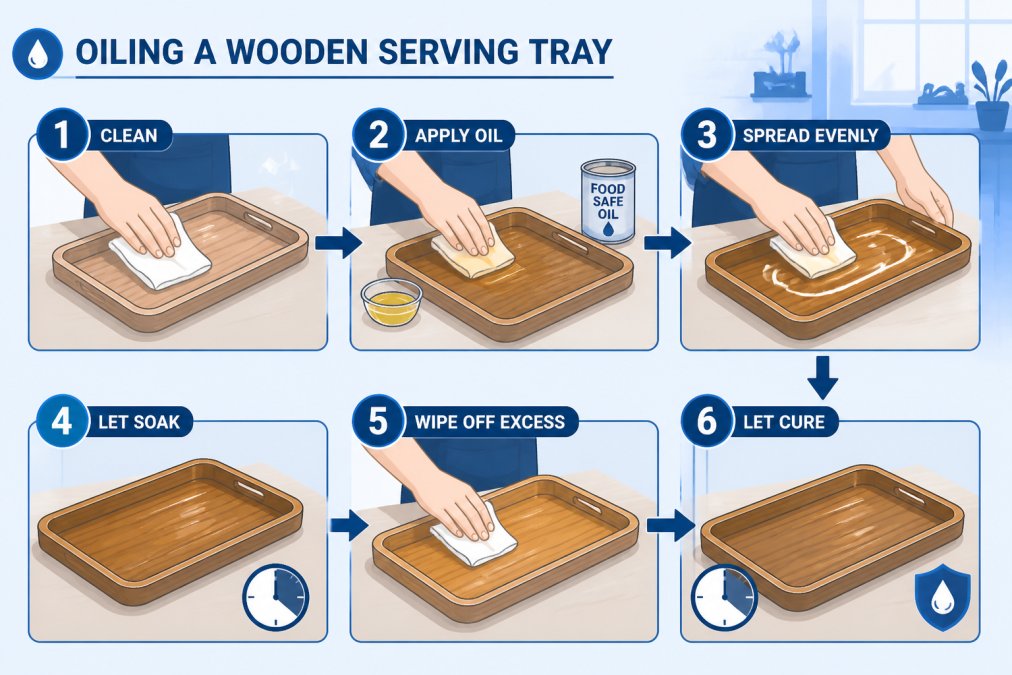
Regular oiling is the most important maintenance step. Apply fresh oil every few weeks with regular use, or every few months for occasional-use trays. Wipe oil on with a soft cloth, let it soak briefly, then wipe away excess. This keeps the wood hydrated and prevents drying and cracking.
Hand wash with warm water and mild soap immediately after use. Don't leave food residue sitting or soak the tray in water. Dry it thoroughly with a soft cloth to prevent moisture damage.
Avoid harsh chemicals, bleach, and dishwasher cycles. Don't expose your tray to extreme temperature swings or direct sunlight for extended periods, as these cause wood movement and finish checking.
If your tray develops minor scratches or the finish becomes dull, light sanding with fine-grit paper (220+) followed by fresh oil restores appearance and protection.
Woods to Avoid for Food Contact
Softwoods like pine, fir, and spruce are too soft for serving trays. They mark and dent easily, absorb moisture and staining readily, and don't age well.
Exotic woods that are endangered or restricted should be avoided for both ethical and legal reasons. Many are protected by CITES regulations, and importing or working with them can result in significant legal liability.
Some woods are toxic or cause allergic reactions. Teak contains oils that can cause dermatitis in sensitive individuals. Cocobolo and other tropical woods can trigger respiratory issues or skin reactions.
Treated or pressure-treated woods should never be used for food contact. These contain chemicals toxic if ingested. Reclaimed wood is appealing for its character, but you can't always verify what treatments it's been exposed to, making it risky for food-service applications.
Conclusion
Choosing the best wood for handmade serving trays means balancing aesthetics, durability, and practical maintenance. Black walnut offers luxury and stability; hard maple delivers modern durability; white oak provides moisture resistance; cherry brings warmth and aging character; acacia offers distinctive grain and value.
At Pinnacle Woodcraft, LLC, we select wood species based on how each tray will actually be used. We pair carefully chosen hardwoods with food-safe finishes, solid joinery, and hand-sanded surfaces that showcase natural beauty. Every piece is built to be used and enjoyed for years.
If you have a vision for a custom serving tray that reflects your style and withstands real use, email your idea and details to MichaelH@pinnaclewoodcraft.net. We'll work with you to select the right wood, design, and finish for a piece that becomes part of your home's story.
Frequently Asked Questions
Is walnut or maple better for serving trays?
Both excel for different reasons. Black walnut offers rich aesthetics and excellent dimensional stability, resisting warping even in thinner panels. Hard maple provides superior durability and resistance to knife marks, with a crisp, modern appearance. Choose walnut for elegance and timeless appeal; choose maple for everyday durability and a contemporary look. Your preference depends on whether you prioritize visual warmth or maximum resistance to wear.
What is the most food-safe wood for serving trays?
Any hardwood is food-safe once finished with a non-toxic sealer. The wood itself is not the concern, the finish is. Use mineral oil, beeswax blends, or FDA-compliant finishes like Titebond III for joinery. Hardwoods like maple, walnut, oak, and cherry are all safe for food contact when properly sealed. Avoid softwoods like pine, which have open grain and absorb moisture, promoting bacterial growth. Always reapply finish regularly to maintain the protective barrier.
Do I need to seal wood serving trays for food safety?
Yes. Raw wood is porous and absorbs moisture, bacteria, and food particles. A food-safe finish is essential for any serving tray that will contact food. Apply mineral oil, beeswax, or food-grade sealant to all surfaces, including the underside and edges. Reapply every few months or after heavy use. A sealed tray is not only safer but also more durable, resisting stains, warping, and knife marks far better than bare wood.
How do you maintain a wooden serving tray?
Hand wash with mild soap and warm water immediately after use; never soak or place in the dishwasher. Dry thoroughly with a soft cloth to prevent moisture absorption and warping. Sand out minor scratches with fine-grit sandpaper, then reapply food-safe finish. Store in a climate-controlled environment to minimize moisture fluctuations. Reapply mineral oil or beeswax finish every 3-6 months, or more frequently if used regularly. Avoid prolonged exposure to direct sunlight, which can fade the grain and dry the wood.
This article was written using GrandRanker