 ultimate-guide
Custom Wood Furniture Pricing: What to Expect in 2026
Table of Contents
- What Determines Custom Wood Furniture Pricing
- Material Costs and Wood Species Selection
- Factors Affecting Custom Woodworking Prices
- Woodworking Labor Rates Per Hour and Craftsmanship Time
- Average Cost of Handmade Dining Tables and Other Furniture Pieces
- Bespoke vs. Mass-Produced: Why Custom Costs More
- How to Request a Quote and Plan Your Budget
- Conclusion
Last Updated: August 16, 2026
What Determines Custom Wood Furniture Pricing
Custom wood furniture pricing depends on material selection, labor intensity, design complexity, finishing techniques, and delivery logistics. A handcrafted dining table costs substantially more than a factory-made version because of the time, skill, and materials involved in creating something built to last decades rather than years.
At Pinnacle Woodcraft, LLC, we've found that transparency about pricing drivers helps customers make informed decisions. Custom wood furniture pricing isn't arbitrary, it follows a logic rooted in material costs, labor hours, and the overhead required to maintain a shop that prioritizes quality over volume.
Material Costs and Wood Species Selection
The type of wood you choose is often the single largest material cost variable in custom woodworking projects.
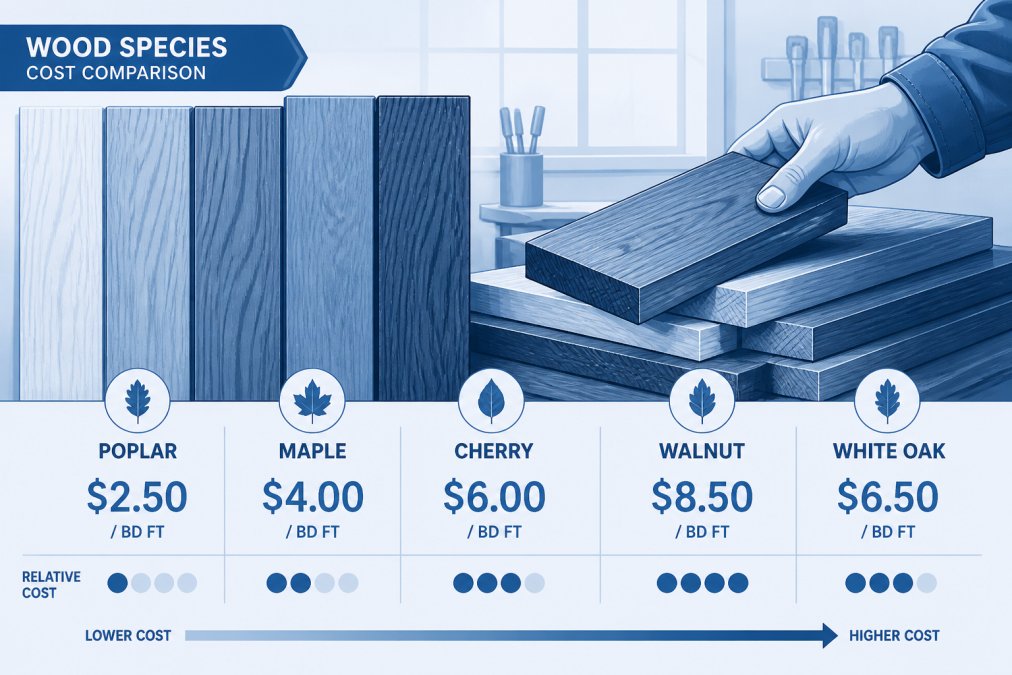
Softwoods like pine and spruce are economical but softer and prone to denting. Hardwoods like oak, maple, and walnut cost more but offer superior durability and visual appeal. Exotic hardwoods such as teak, rosewood, or walnut command premium prices due to limited supply and distinctive grain patterns.
Woodworkers purchase furniture-grade lumber milled to specific thicknesses and widths. Lumber is measured in board feet, one foot long, one foot wide, and one inch thick. Larger projects require more board feet, and premium species cost significantly more per board foot.
Hardware costs add up quickly. Quality brass hinges, drawer slides, and fasteners cost more than basic steel components but last longer and look more refined. Finishing materials, stains, oils, polyurethane, wax, represent another material expense. Hand-sanded finishes that highlight natural wood grain require quality products and multiple application coats.
Factors Affecting Custom Woodworking Prices
Design complexity is where custom wood furniture pricing diverges most dramatically from standard pieces. A simple rectangular table costs less than one with curved legs, inlaid details, or complex joinery.
Joinery directly impacts both labor time and material waste. Simple butt joints take minimal time but aren't as strong. Mortise and tenon joints, dovetails, and box joints require precision and skill, creating stronger connections and visible craftsmanship. A piece using hand-cut dovetails costs more but will be structurally superior.
Custom dimensions add complexity. A maker building to your exact specifications can't use standard templates or pre-cut components. Design revisions during the building process increase costs, as the maker may need to start over on certain components.
Lead time affects pricing. A maker with a long backlog might charge more or require a longer timeline. Rush fees may apply for expedited work. Shop overhead costs, rent, utilities, equipment maintenance, insurance, and tools, factor into the hourly rate a maker must charge.
Woodworking Labor Rates Per Hour and Craftsmanship Time
Labor represents the largest expense in custom wood furniture pricing for most makers.
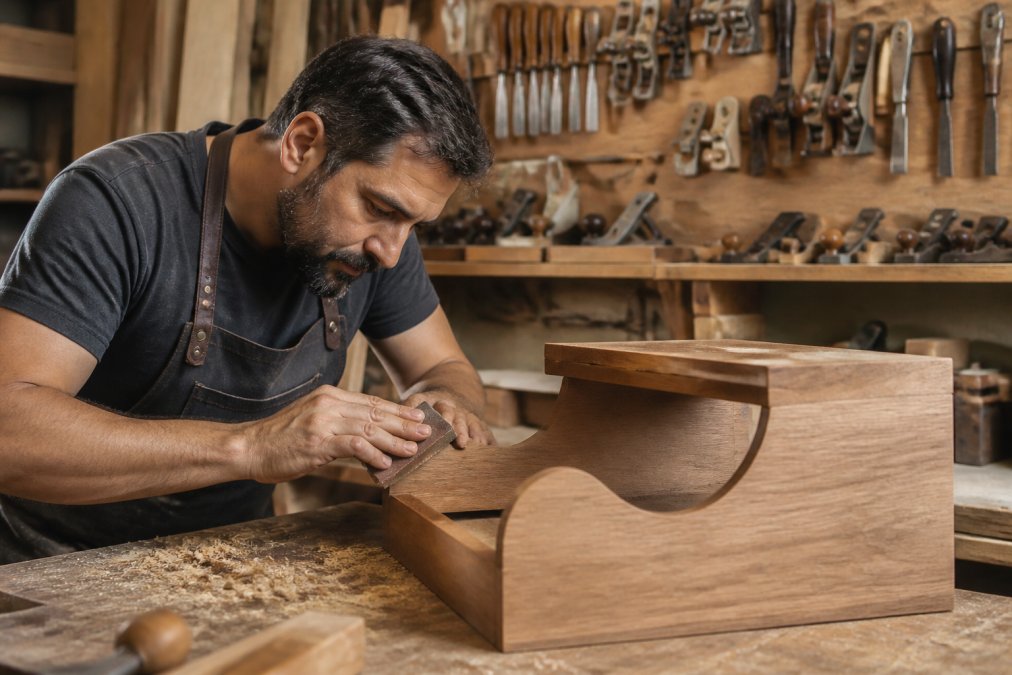
A skilled woodworker's hourly rate varies by experience, location, and reputation. Entry-level makers charge less than established artisans with decades of experience. A maker specializing in intricate inlay work commands higher rates than one doing basic joinery.
The actual time required often surprises customers. A simple charcuterie board might take 8-12 hours when accounting for design consultation, material selection, cutting, joinery, sanding, finishing, and quality checks. A custom dining table can require 60-120 hours depending on design complexity and finishing details.
Design consultation, material sourcing, and setup are often included in overall project cost rather than charged separately. Hand-sanded finishes require significant labor compared to machine sanding or spray finishes. Quality control, inspecting joints, ensuring grain patterns align, and testing functionality, adds time that justifies the final price.
Average Cost of Handmade Dining Tables and Other Furniture Pieces
A basic handcrafted dining table with four legs, simple joinery, and standard finish represents a significant investment compared to mass-produced alternatives. Tables with design details like curved legs, breadboard ends, or inlaid stringing command higher prices due to added material and labor costs.
Custom dimensions affect pricing significantly. A table built to fit your exact space requires custom calculation and cutting. Smaller pieces like side tables or console tables typically cost less than dining tables due to reduced material and labor requirements, but still command premium prices compared to mass-produced versions.
Email your idea and a few details to MichaelH@pinnaclewoodcraft.net →
Specialty pieces with custom upholstery, integrated storage, or hidden compartments vary widely in price based on complexity. At Pinnacle Woodcraft, LLC, we've built everything from small decorative pieces to substantial furniture commissions. The principle remains consistent: the more specific your vision, the more time and skill required to execute it properly.
Bespoke vs. Mass-Produced: Why Custom Costs More
Mass-produced furniture relies on economies of scale. Manufacturers producing thousands of identical tables spread tooling costs, design time, and overhead across all units. They use standardized components, pre-cut materials, and assembly-line processes. However, this means compromises: particle-board cores, veneered surfaces that peel over time, and joinery designed for assembly speed rather than longevity.
Bespoke furniture is built to order, one piece at a time. There are no economies of scale. The maker invests the same setup time and design effort for each piece and cannot cut corners on materials or processes because reputation depends on each individual piece being excellent.
A handcrafted table built with solid wood, traditional joinery, and quality finishes will be used and enjoyed for decades. It can be refinished, repaired, and passed down. A mass-produced table typically lasts 5-10 years before structural failure or aesthetic degradation makes it unusable.
Bespoke makers select lumber carefully, rejecting pieces with defects. A custom piece showcases natural wood grain because material quality supports it. With bespoke furniture, you define every parameter, your vision becomes the product. This flexibility requires a maker who can adapt their process to your specific needs, which demands skill and adds cost.
How to Request a Quote and Plan Your Budget
Start by clarifying what you want. Describe the piece's function, approximate dimensions, wood species preference, and design style. Share inspiration images if you have them. The more detail you provide, the more accurate the quote will be.
Communicate your timeline and budget constraints. If you have flexibility, many makers offer better pricing for pieces that fit into their existing schedule. Being transparent about budget helps the maker propose solutions that meet your needs and financial reality.
Request a detailed quote that breaks down costs by materials, labor, hardware, finishing, and delivery. This transparency helps you understand where your money goes and compare quotes fairly. Ask about the revision process and what's included in the quoted price, delivery, installation, warranty, or revisions.
When comparing quotes from different makers, remember that lower price doesn't necessarily mean better value. A maker charging less might be cutting corners on materials or rushing the work. Compare the quoted timeline, materials, joinery details, and finishing approach alongside price. Consider the maker's portfolio and reputation, a maker with a strong track record is worth paying for.
Conclusion
Custom wood furniture pricing reflects the reality of handcrafted quality: skilled labor, premium materials, and the overhead required to maintain a workshop dedicated to craftsmanship. When you understand the factors driving cost, material selection, joinery complexity, labor hours, and finishing quality, the investment becomes logical rather than surprising.
If you're ready to commission a custom piece that will be used and enjoyed for years, Pinnacle Woodcraft, LLC specializes in turning your vision into one-of-a-kind furniture. Our commitment to traditional craftsmanship, carefully selected lumber, solid joinery, and hand-sanded finishes ensures each piece carries the quality and personality that mass-produced alternatives simply cannot match. Email your idea and a few details to MichaelH@pinnaclewoodcraft.net, and let's discuss how we can build something exceptional for your home.
| Factor | Impact on Cost | Typical Range |
|---|---|---|
| Wood Species | Material cost driver | Budget softwoods to premium exotics |
| Joinery Type | Labor and durability | Simple butt joints to hand-cut dovetails |
| Design Complexity | Time and skill required | Simple rectangular to intricate details |
| Dimensions | Material and labor | Standard to fully custom |
| Finishing Quality | Labor intensity | Basic to hand-sanded multiple coats |
| Lead Time | Availability and urgency | Standard to expedited rush |
| Hardware Quality | Material and aesthetic | Basic steel to premium brass |
Frequently Asked Questions
Why is custom wood furniture more expensive than mass-produced pieces?
Custom wood furniture involves handpicked materials, solid joinery techniques, and skilled labor that mass production cannot replicate. Each bespoke piece is built to your exact specifications rather than manufactured in bulk. The maker invests time in design consultation, material selection, and hand-finishing to create a one-of-a-kind item built to last decades. Mass-produced furniture often uses particleboard, stapled joints, and quick finishes designed for cost reduction, not longevity.
What factors influence the final price of custom woodworking projects?
The primary cost drivers include wood species and lumber grade, design complexity and joinery type, size and customization level, finishing techniques, lead time and rush fees, and shipping distance. Hardwoods like walnut and cherry cost more than softwoods. Complex joinery (mortise and tenon, dovetails) takes longer than simple construction. Larger pieces and intricate designs require more material and labor hours. Premium finishes and regional delivery also affect the final quote.
How long does a custom wood furniture piece actually take to make?
Timeline depends on complexity, current shop workload, and your design. Simple items like charcuterie boards may take 2-4 weeks, while custom dining tables or cabinetry can take 8-16 weeks. Rush orders are possible but typically incur additional fees. Seasonal demand and material sourcing also impact lead time. When requesting a quote, discuss your deadline upfront, makers need realistic timelines to maintain quality craftsmanship.
How do woodworkers calculate their labor and material costs?
Makers estimate labor by calculating project hours based on design complexity, material prep, joinery, and finishing work, then apply an hourly rate reflecting their skill level and overhead costs. Material costs include lumber at board-foot rates plus hardware, finishes, and waste allowance. A typical markup covers shop overhead, tools, insurance, and profit. The final quote combines these elements plus shipping. Transparent makers break down these costs so you understand what you're paying for.
This article was written using GrandRanker