 how-to
How to Care for Handmade Wooden Boards
Table of Contents
- Daily Cleaning and Maintenance for Wooden Boards
- Best Food-Grade Oil for Wood Boards and Seasoning
- How to Sanitize Wooden Cutting Boards Safely
- Wooden Board Maintenance Schedule: What to Do and When
- How to Fix a Warped Wooden Board and Prevent Damage
- What Not to Do: Protecting Your Investment
- Conclusion
Last Updated: August 10, 2026
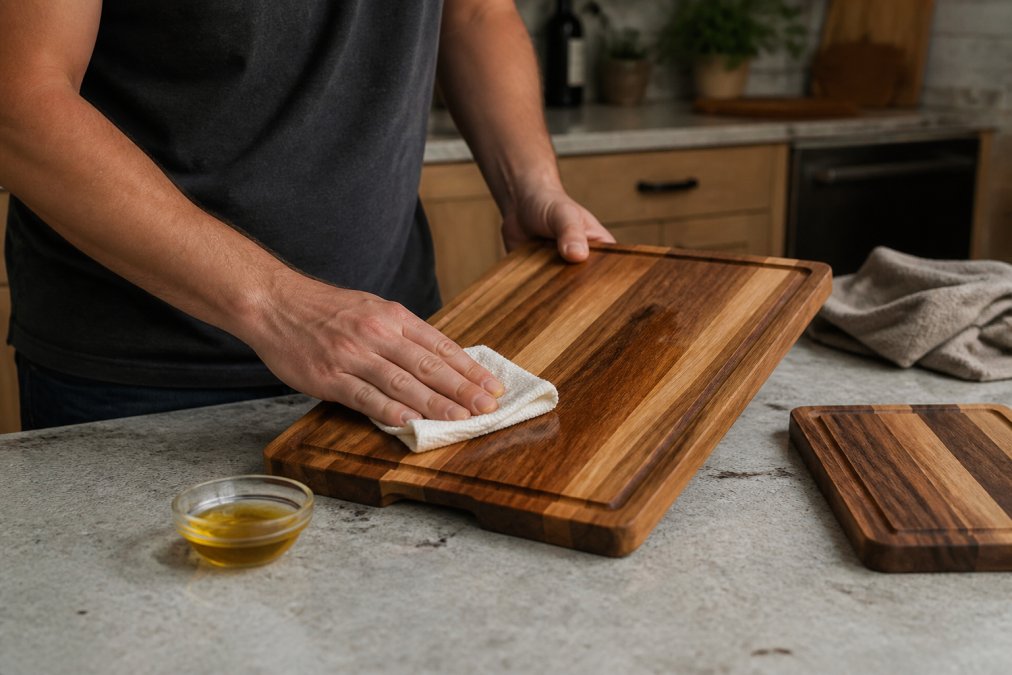
According to wood care specialists, proper maintenance of handmade wooden boards extends their lifespan by years and preserves their natural beauty. At Pinnacle Woodcraft, LLC, we craft custom wooden boards designed to be used and enjoyed for decades, but only if you care for them correctly. This guide walks you through how to care for handmade wooden boards with practical, step-by-step techniques that protect your investment and keep your pieces looking handcrafted for life.
The difference between a board that lasts five years and one that lasts fifty comes down to consistency. Most owners treat their boards sporadically, then wonder why the wood warps or the finish dulls. The real secret isn't complicated, it's about understanding what wood needs and building a simple routine around it.
Daily Cleaning and Maintenance for Wooden Boards
Proper daily cleaning prevents food residue from drying into the grain and protects the wood's natural finish.
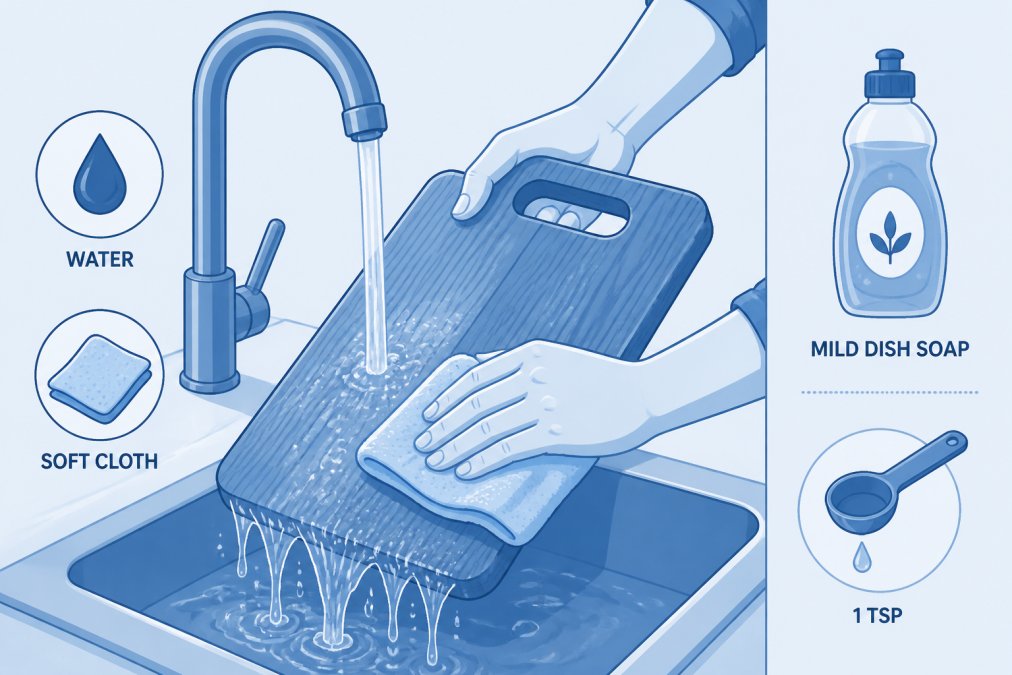
Immediately after use, hand wash your board with warm water and mild dish soap using a soft cloth or sponge. Never use abrasive scrubbers. Pay special attention to end-grain edges, where exposed wood fibers absorb moisture faster. Rinse thoroughly to remove all soap residue, which can dull the finish.
Towel dry immediately. Wet wood swells slightly, and air drying creates uneven drying that leads to warping. Wipe both sides thoroughly, especially the edges where water collects.
Never soak your board. Submerging wood in water forces moisture deep into the grain, causing uneven swelling, one of the most common mistakes homeowners make.
Store your board vertically or at a slight angle, not flat. Flat storage traps moisture underneath and causes cupping or warping. Leaning it against a wall allows air circulation on all sides.
Best Food-Grade Oil for Wood Boards and Seasoning
Oil is the primary tool for protecting wooden boards. It penetrates the wood fibers, creating a moisture barrier that prevents excess water absorption while allowing the wood to breathe. Without regular oiling, your board becomes susceptible to staining, warping, and surface cracking.
The best oils for wooden boards are food-grade mineral oil and beeswax blends. These are safe for food contact, won't go rancid, and create a durable protective layer lasting weeks between applications.
Mineral Oil vs. Beeswax Blends
Mineral oil is a refined petroleum product that's completely food-safe and odorless. It penetrates deeply into the wood grain and provides excellent moisture protection. It typically lasts 2-4 weeks before the board looks dull.
Beeswax blends combine mineral oil with natural beeswax in roughly a 3:1 or 4:1 ratio. Beeswax adds a subtle sheen and creates a harder surface layer that resists water beading better than mineral oil alone. They last 3-5 weeks and leave a more polished appearance, though they require more effort to apply evenly.
For most homeowners, a beeswax blend offers the best balance of protection and appearance.
Application Techniques for Deep Conditioning
Apply oil when the board is completely dry, ideally after cleaning and letting it sit 15-20 minutes to ensure no surface moisture remains.
Pour a small amount of oil (about the size of a quarter for a standard cutting board) onto a clean cloth. Work in the direction of the grain using circular motions to penetrate the wood. Pay special attention to end-grain edges, which absorb oil faster and need extra conditioning to prevent warping.
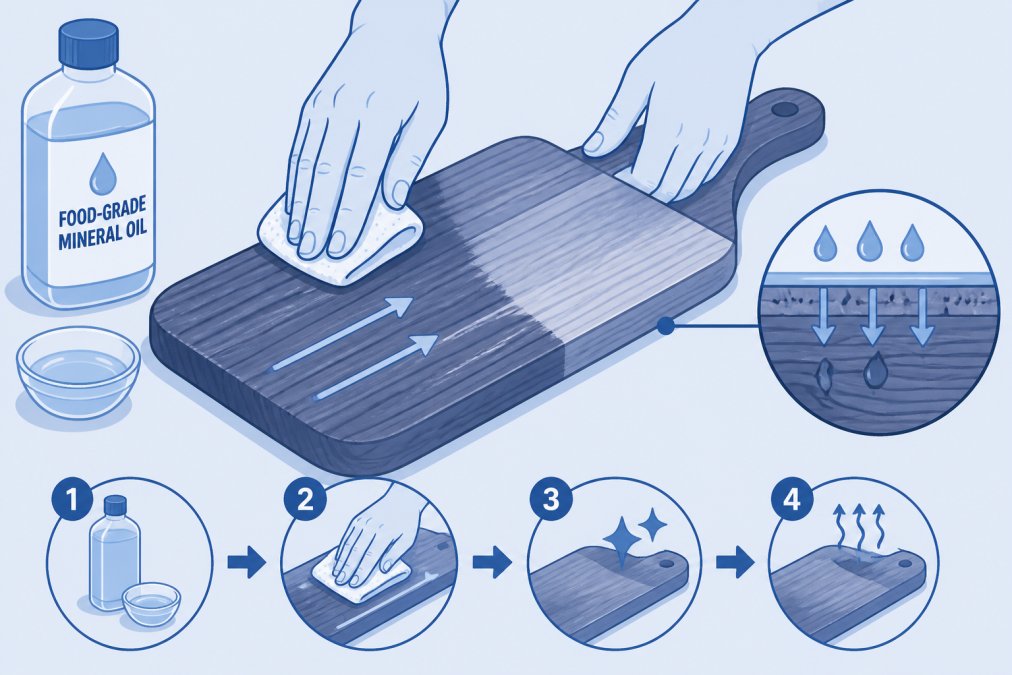
Let the oil sit for 5-10 minutes to penetrate deeper, then buff away excess with a clean cloth. The board should look slightly darker and feel smooth, but not slippery or sticky.
Establish a conditioning schedule: oil your board every 2-4 weeks if used regularly, or monthly if used occasionally. Boards oiled weekly tend to look and perform best. Consistency matters more than intensity.
How to Sanitize Wooden Cutting Boards Safely
Sanitizing kills bacteria that accumulate in knife marks and surface scratches, unlike regular dish soap which only removes food residue.
Natural Ingredients for Sanitizing
Coarse salt and lemon juice is the most effective natural sanitizer. The salt scrubs away bacteria lodged in the grain, while lemon juice's acidity kills microorganisms. Cut a lemon in half, dip the cut side in coarse salt, and rub it vigorously across the entire board, paying special attention to knife marks. Let it sit for 5 minutes, then rinse thoroughly and towel dry.
White vinegar and hydrogen peroxide can also sanitize separately. Spray vinegar on the board, let sit 5 minutes, then rinse. For stronger sanitizing, use hydrogen peroxide instead, let sit 10 minutes, and rinse thoroughly. Never mix vinegar and hydrogen peroxide together.
Use these methods weekly if your board is used for raw meat or fish, or monthly for general use. Follow sanitizing with your regular oiling routine to restore the moisture barrier.
Wooden Board Maintenance Schedule: What to Do and When
Consistency prevents problems from developing in the first place.
| Task | Frequency | Details |
|---|---|---|
| Hand wash with dish soap | After each use | Warm water, soft cloth, towel dry immediately |
| Sanitize with salt and lemon | Weekly (if used for raw meat) or monthly | Scrub surface, let sit 5 minutes, rinse thoroughly |
| Oil with food-grade mineral oil or beeswax blend | Every 2-4 weeks | Apply with cloth, work into grain, buff excess |
| Deep conditioning treatment | Every 3-6 months | Apply oil generously, let sit 15-20 minutes, buff |
| Inspect for damage | Monthly | Check for warping, cracks, or surface deterioration |
This schedule assumes regular use. If your board sits unused for weeks, extend the oiling interval. If used daily for heavy tasks, oil weekly.
Email your idea and a few details to [email protected] →
Monthly inspection is critical. Early detection of warping or cracking allows you to address problems before they worsen. A board beginning to cup can often be saved by increasing oil frequency and adjusting storage conditions.
How to Fix a Warped Wooden Board and Prevent Damage
Warping happens when wood absorbs moisture unevenly. One side swells faster than the other, causing the wood to bend. Prevention is easier than repair, but warped boards can often be restored.
Addressing Warping from Environmental Factors
Humidity is the primary environmental factor causing warping. Kitchens near dishwashers or sinks are particularly prone to humidity fluctuations.
If your board is beginning to warp, increase oiling to weekly applications. The oil creates a moisture barrier that slows additional humidity absorption. Store the board away from direct heat sources and humidity, not near dishwashers, sinks, or windows.
For mild warping, place the board flat on a table with weights distributed evenly across the surface for 24-48 hours. This sometimes flattens recent warping, though boards warped for months rarely respond. Severe warping usually cannot be fully corrected and is best retired from food use.
Repairing Surface Damage and Knife Marks
Light sanding can restore the surface. Use fine-grit sandpaper (120-150 grit) and sand in the direction of the grain. Sand lightly until marks are no longer visible, then wipe away dust with a damp cloth and let dry completely.
After sanding, apply oil immediately to restore the moisture barrier. The board may require more frequent oiling for a few weeks.
Deep gouges penetrating more than a quarter-inch are challenging. Small gouges can be filled with food-safe wood filler, but the repair will be visible. For handmade pieces from craftsmen like those at Pinnacle Woodcraft, LLC, deep damage is often best left alone, the marks tell the story of the board's use and add character to functional art.
What Not to Do: Protecting Your Investment
Understanding what damages wooden boards is as important as knowing what protects them.
Never put your board in the dishwasher. Heat, high-pressure water jets, and harsh detergents strip the protective oil finish and force moisture deep into the wood.
Never soak the board. Even brief soaking causes uneven swelling and cupping.
Never leave it wet. Moisture sitting on the surface for hours penetrates the grain. Always towel dry immediately.
Never store it flat in a closed cabinet. Stacked or flat storage traps moisture underneath and prevents air circulation, creating conditions for mold growth.
Never use it for raw meat without sanitizing afterward. Bacteria can accumulate in knife marks. Sanitize with salt and lemon or vinegar for extra safety.
Never apply furniture finishes. Polyurethane, varnish, and lacquer are not food-safe and crack over time. Stick to food-grade mineral oil and beeswax.
Never ignore visible damage. A small crack can split the entire board within months if left untreated. Address warping and cracking early.
Proper care for handmade wooden boards is straightforward: wash immediately after use, dry thoroughly, and oil regularly. These three habits prevent 90% of the problems that destroy wooden boards. The boards crafted by Pinnacle Woodcraft, LLC are built to last decades, but they require the care that any quality tool deserves. Start with a simple maintenance schedule, stay consistent, and your board will reward you with years of reliable service and a patina that only comes from being used and cared for properly. For custom boards designed to match your exact vision, reach out to [email protected] and discover how handcrafted quality becomes part of your daily life.
Frequently Asked Questions
Should you oil wooden boards?
Yes, oiling is essential for caring for handmade wooden boards. Regular oiling creates a moisture barrier that protects the wood from drying out, cracking, and warping. Food-grade mineral oil and beeswax blends are the safest choices for boards used with food. Oil your board every 3-6 months, or more frequently if it's used daily. This simple step dramatically extends the life of your board and keeps the wood fibers supple and resilient.
What should I condition my wooden cutting board with?
Use food-grade mineral oil or a beeswax and mineral oil blend. Mineral oil is affordable, odorless, and won't go rancid like vegetable oils. Beeswax blends add extra protection and create a more hydrophobic surface. Apply with a soft cloth, working along the grain, and let it absorb for several hours before wiping away excess. Avoid olive oil, coconut oil, and other cooking oils, they can become sticky or rancid over time and attract bacteria.
How often should you oil a handmade wooden board?
Oil your board every 3-6 months for regular household use, or monthly if you use it daily for food preparation. Watch for signs that conditioning is needed: the surface looks dull, feels dry to the touch, or water beads up less readily. A consistent wooden board maintenance schedule prevents deeper problems like warping and cracking. Seasonal changes also matter, dry winter months may require more frequent oiling than humid summers.
Can you put a handmade wooden board in the dishwasher?
No. Dishwashers expose wood to prolonged moisture, high heat, and harsh detergents that damage the grain, weaken joinery, and cause warping and cracking. Always hand wash with mild dish soap and cool water, then towel dry immediately. This simple habit is the single most important step in caring for handmade wooden boards and protecting your investment for years to come.
This article was written using GrandRanker