 how-to
How to Maintain Handmade Wooden Charcuterie Boards
Table of Contents
- Daily Cleaning and Hand Washing Your Wooden Charcuterie Board
- Drying Techniques to Prevent Warping and Cracking
- Best Food Grade Mineral Oil for Wood and How to Apply It
- How Often to Oil Wooden Cutting Board for Optimal Maintenance
- How to Remove Stains from Wooden Boards and Eliminate Odors
- Sanitization vs. Cleaning: Protecting Your Board and Your Food
- Do's and Don'ts of Wooden Board Maintenance
- Conclusion
Last Updated: August 5, 2026
Daily Cleaning and Hand Washing Your Wooden Charcuterie Board
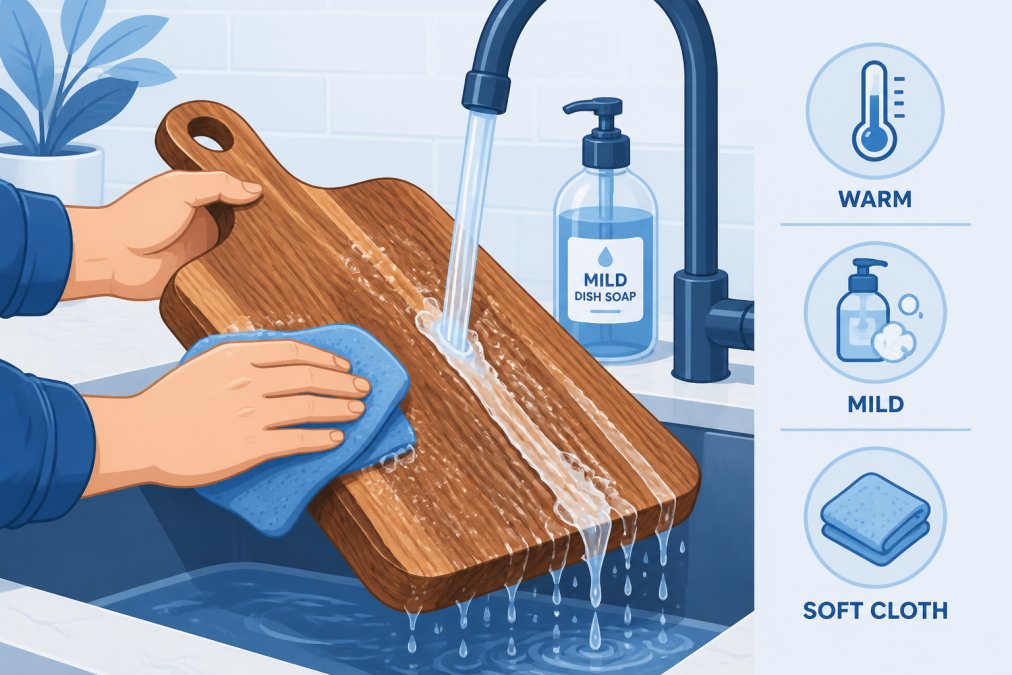
Hand washing is the foundation of wooden board care. Wood is porous and absorbs moisture, so cleaning within 30 minutes of use, while food residue is still soft, prevents permanent damage. Rinse the board under warm running water and use a soft cloth to remove food particles. Never submerge it in standing water or use a dishwasher, as excessive moisture causes warping.
Apply mild dish soap to a soft cloth and gently scrub both sides in the direction of the wood grain, paying special attention to grooves. Rinse thoroughly, then immediately dry with a clean towel. This step is critical, excess water absorbed into the wood fiber creates conditions for warping and mold growth.
Store your board upright or at a slight angle to allow air circulation underneath. Laying it flat on a wet countertop traps moisture against the bottom surface. For handmade boards from Pinnacle Woodcraft, LLC, this daily care routine preserves the hand-sanded finish and natural wood beauty for years.
Drying Techniques to Prevent Warping and Cracking
Proper drying is as important as washing. Warping happens when wood fibers absorb moisture unevenly; cracking occurs when wood dries too quickly or inconsistently. Hand dry the board immediately after washing, stand it upright or at an angle for air circulation, and allow 30-60 minutes of air drying before storing or using it again.
Avoid direct heat sources like ovens, radiators, or sunny windowsills. Rapid drying causes outer wood fibers to dry faster than inner ones, creating internal stress that leads to cracking. Room temperature air drying is always safer.
Humidity matters more than temperature. In dry climates, boards are more prone to cracking; in humid regions, ensure adequate air circulation around stored boards to prevent moisture accumulation. Never store a damp board in a closed cabinet or wrapped in plastic, as both trap moisture and create conditions for mold growth. For custom pieces from Pinnacle Woodcraft, LLC, proper drying techniques maintain the moisture balance that keeps wood stable.
Best Food Grade Mineral Oil for Wood and How to Apply It
Food-grade mineral oil is the standard maintenance product for wooden boards because it's safe for food contact, doesn't go rancid, and creates a water-resistant barrier. Look for products labeled "food-grade" or "USP mineral oil" that meet food safety standards. Avoid hardware store mineral oil or baby oil, which may contain non-food-safe additives.
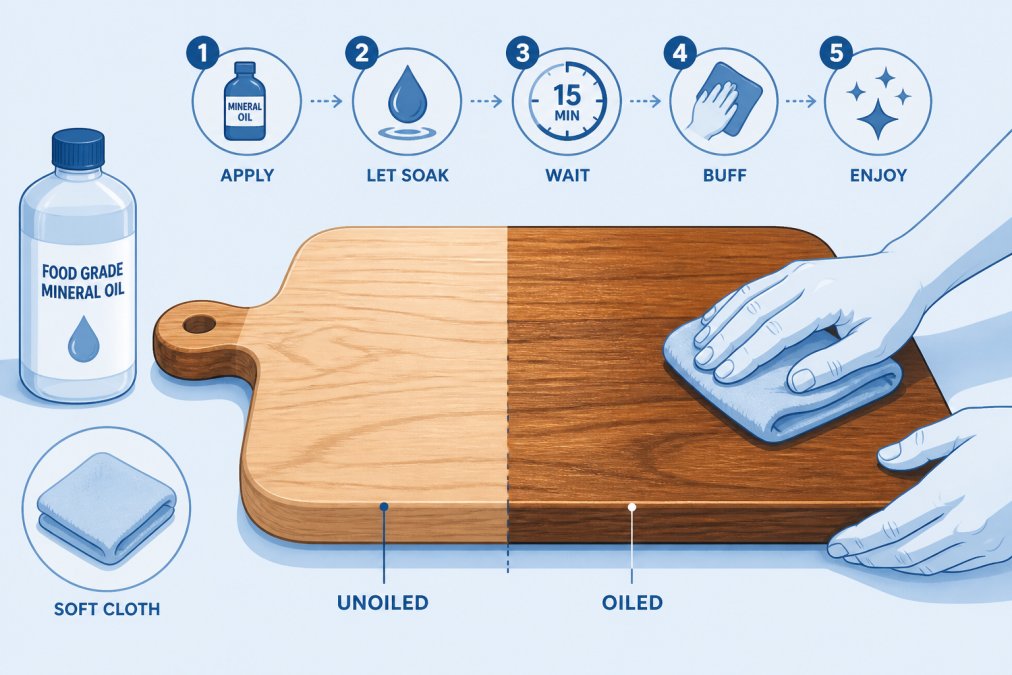
Start with a clean, dry board. Pour a small amount of oil (about a quarter-sized amount for a standard board) directly onto the surface. Using a soft cloth, rub the oil into the wood in the direction of the grain, working across the entire surface including edges and underside. Let the oil sit for 10-15 minutes, then buff away excess oil with a clean cloth. A properly oiled board should feel smooth and slightly moisturized, not slick.
How Often to Oil Wooden Cutting Board for Optimal Maintenance
Frequency depends on usage and climate. A board used daily needs oiling every 2-4 weeks; one used occasionally needs oiling every 2-3 months. The best indicator is appearance, when the wood looks dry or dull, it's time to oil. In dry climates, boards lose moisture faster and may need more frequent oiling. Winter heating systems also dry indoor air, so boards may need oiling more often during cold months.
A good maintenance schedule is monthly oiling during regular use. This keeps the wood conditioned, protects the surface from stains and moisture, and maintains natural color and grain visibility. For handmade boards from Pinnacle Woodcraft, LLC, consistent oiling preserves the craftsmanship and hand-sanded finish that makes each piece unique.
How to Remove Stains from Wooden Boards and Eliminate Odors
For surface stains, make a paste from baking soda and water, apply it to the stained area, let it sit 5-10 minutes, then gently scrub with a soft cloth in the direction of the wood grain. Rinse thoroughly and dry immediately.
For stubborn stains, try a paste of lemon juice and coarse salt. The acidity and abrasive texture can lift deeper discoloration. Avoid aggressive scrubbing, which damages the wood surface.
To eliminate odors, sprinkle baking soda on the board, let it sit 10-15 minutes, then scrub gently with a damp cloth. For severe odors, create a paste of baking soda and lemon juice, apply it to the entire surface, let it sit 20 minutes, then scrub and rinse. Follow up with thorough drying and an application of food-grade mineral oil.
Email your idea and a few details to [email protected] →
Never use bleach or harsh chemical cleaners on wooden boards, as these damage the wood fiber and can leave toxic residues that contaminate food.
Sanitization vs. Cleaning: Protecting Your Board and Your Food
Cleaning removes visible dirt and food residue; sanitizing kills bacteria that may remain after cleaning. Cleaning with warm water and mild dish soap removes most bacteria through mechanical action. For daily use, this is usually sufficient.
Sanitizing becomes important after handling raw meat, poultry, or fish. The safest method for wooden boards is a diluted white vinegar solution: mix one part white vinegar with one part water, spray or wipe the entire surface, let it sit for a few minutes, then rinse thoroughly and dry immediately. Vinegar's acidity kills most bacteria without harming the wood. Alternatively, wash the board thoroughly with hot water and soap, then let it air dry completely in sunlight, as UV light has natural antimicrobial properties.
Wooden boards are safe for food when properly cleaned and maintained. Sanitizing is an additional step to take after handling raw proteins, not a routine needed every time.
Do's and Don'ts of Wooden Board Maintenance
Do's:
- Do hand wash your board with warm water and mild soap within 30 minutes of use
- Do dry your board immediately after washing with a clean cloth
- Do store your board upright or at an angle to allow air circulation
- Do oil your board every 4-8 weeks with food-grade mineral oil
- Do rub oil in the direction of the wood grain
- Do buff away excess oil with a clean cloth after application
- Do use natural cleaning methods like baking soda, lemon juice, and salt for stains and odors
- Do sanitize after handling raw meat or poultry using vinegar solution or thorough hot water washing
- Do keep your board away from direct heat sources and extreme temperature changes
- Do inspect your board regularly for signs of damage or moisture problems
Don'ts:
- Don't submerge your board in standing water or leave it soaking
- Don't put your wooden board in a dishwasher
- Don't let your board air dry while lying flat on a wet surface
- Don't store your board in a closed cabinet or wrapped in plastic
- Don't use bleach or harsh chemical cleaners on a regular basis
- Don't apply oil to a wet board, always oil a clean, dry surface
- Don't leave excess oil sitting on the board surface without buffing it away
- Don't expose your board to direct sunlight for extended periods
- Don't place your board near heating vents, radiators, or air conditioning units
- Don't use your board for cutting raw meat and then immediately serve food on it without sanitizing
These practices reflect the care standards that craftspeople recommend for maintaining handmade wooden pieces.
Proper maintenance of handmade wooden charcuterie boards isn't complicated, but it does require consistency. The daily cleaning routine, regular oiling, and thoughtful storage practices described in this guide protect your investment and keep the board functional and beautiful. For custom wooden boards crafted with traditional techniques and carefully selected lumber, contact Pinnacle Woodcraft, LLC at [email protected] to learn about commissioning a board that reflects your personal style and will serve your home with lasting quality.
Frequently Asked Questions
How often should you oil a wooden charcuterie board?
Oil your wooden charcuterie board every 3 to 6 months under normal use, or more frequently if the board shows signs of drying. Boards used regularly for food service may need oiling every 2 to 3 months. Watch for a dull appearance or wood that feels dry to the touch, these are signals to reapply food-grade mineral oil. Proper oiling maintains the wood fiber's moisture balance and prevents cracking and warping.
What is the best oil for wooden charcuterie boards?
Food-grade mineral oil is the gold standard for maintaining wooden charcuterie boards. It's odorless, flavorless, and safe for surfaces that contact food. Other options include beeswax-based conditioners (which add a protective layer and natural finish), and natural alternatives like hemp oil or flaxseed oil if you prefer plant-based products. Avoid olive oil and other cooking oils, they can become rancid and leave sticky residue. Always verify any oil is food-safe before applying.
Can you put a wooden charcuterie board in the dishwasher?
No, never place a handmade wooden charcuterie board in the dishwasher. High heat, prolonged moisture, and harsh detergents cause the wood to warp, crack, and lose its finish. Hand wash only with warm water, mild dish soap, and a soft cloth. Dry immediately with a towel to maintain moisture balance in the wood. This gentle approach preserves the craftsmanship and extends the life of your board significantly.
How do you sanitize a wooden charcuterie board without damaging it?
Sanitization and cleaning are different steps. After hand washing with warm water and mild dish soap, sanitize by wiping the entire surface with a cloth dampened in a solution of one part white vinegar to one part water, or use a food-safe sanitizing spray. Allow it to air dry completely. For deep sanitization, sprinkle coarse salt and lemon juice on the surface, scrub gently with a soft cloth, then rinse and dry immediately. This method disinfects the porous surface without harsh chemicals or prolonged moisture exposure.
This article was written using GrandRanker