 ultimate-guide
Identifying High Quality Artisan Wooden Goods
Table of Contents
- What Makes Artisan Wooden Goods Different
- Wood Species Identification and Quality Selection
- Traditional Woodworking Joinery Techniques That Signal Craftsmanship
- Solid Wood vs Veneer Identification
- Evaluating Finish Quality and Surface Craftsmanship
- Modern Farmhouse Style Custom Wooden Decor Characteristics
- Sustainability, Maintenance, and Longevity Indicators
- Sensory Testing and Structural Integrity Inspection
Last Updated: August 17, 2026
What Makes Artisan Wooden Goods Different
Artisan wooden goods stand apart from mass-produced alternatives through intentional craftsmanship: specific wood species selection, traditional joinery techniques, and hand finishing. The difference is structural. Mass-produced items rely on particleboard, MDF, and veneers glued to cheap substrates, while artisan pieces use solid wood throughout, improving with age rather than deteriorating.
Handcrafted items feature visible wood grain patterns, natural color variation, and finishes that develop patina over time. These aren't flaws; they're proof the piece was made by someone who understands wood. When evaluating quality artisan wooden goods, you're asking: Did someone care about this object? That care shows in every detail, from how joints fit together to how the finish feels under your hand.
Wood Species Identification and Quality Selection
The type of wood used determines performance, aging, and durability. Quality artisan wooden goods start with the right material selection.
Hardwoods vs. Softwoods
Hardwoods like oak, walnut, cherry, and maple are denser and more durable than softwoods like pine and spruce. Hardwoods resist denting and scratching, making them ideal for furniture and frequently handled items. Softwoods appear in decorative pieces meant for display. Hardwoods typically display complex, varied grain patterns that suggest the crafter selected wood for its character, not just availability.
Moisture Content and Stability
Wood moves with humidity. Quality artisans kiln-dry their wood to 6-12% moisture content, preventing the seasonal movement that causes joints to fail and surfaces to crack. Cracks radiating from the center indicate improper drying. Small checks in corners are normal, but large splits suggest poor preparation.
Color and Character Marks
Natural wood contains knots, mineral streaks, and color variation. These prove the piece is solid wood. Artisans celebrate these features; factories hide them under stain and veneer. Expect and appreciate color variation across the piece. Uniform, plastic-looking color indicates staining that masks cheap wood.
Traditional Woodworking Joinery Techniques That Signal Craftsmanship
How a piece is assembled determines its strength and longevity. Traditional woodworking joinery techniques represent the difference between furniture that survives generations and pieces that fail under normal use.
Dovetail Joints
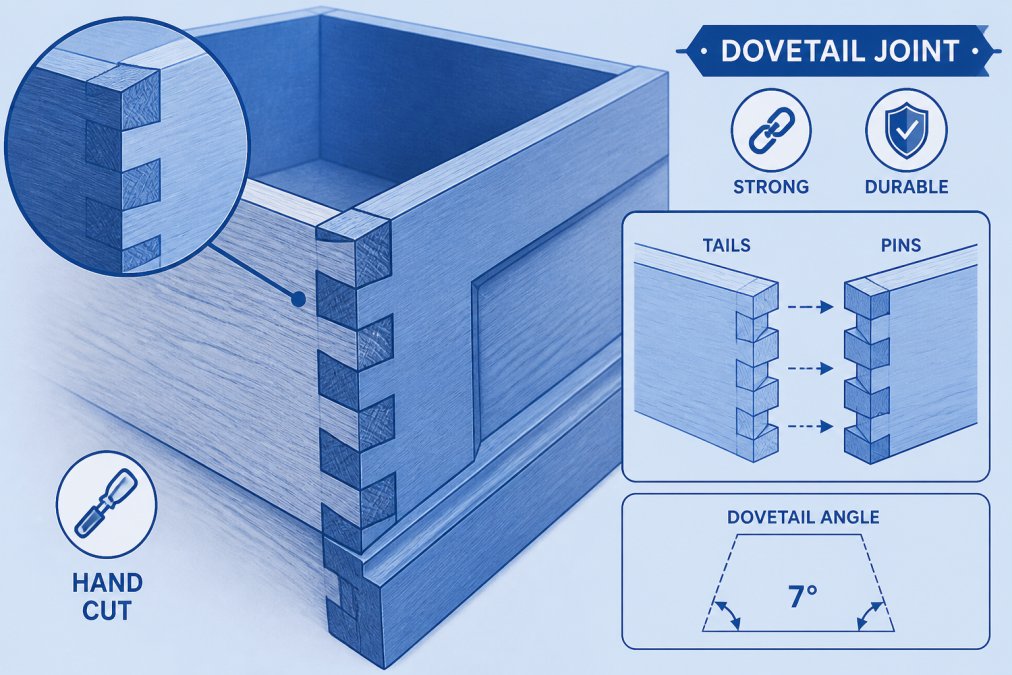
Dovetail joints are the gold standard for drawer construction. The interlocking "tails" and "pins" create mechanical strength; the joint locks together without glue. Hand-cut dovetails show slight irregularities; machine-cut dovetails are perfectly uniform. Both are legitimate, but hand-cut dovetails indicate investment in traditional craftsmanship. The joint will outlast the wood itself.
Mortise and Tenon Joints
Mortise and tenon joints connect legs to tables, aprons to frames, and rails to stiles. A tenon (protruding piece) fits into a mortise (rectangular hole). This joint is incredibly strong and has been used for thousands of years. Quality artisan wooden goods feature mortise and tenon joinery wherever structural loads occur. These joints should be tight with no movement.
Dowel Joints and Pocket Hole Joinery
These faster methods reduce labor costs. Both work but aren't as strong as mortise and tenon or dovetails. Artisan makers use these techniques strategically for secondary connections or minimal-load pieces. If every joint uses dowels or pocket holes, the maker prioritized speed over strength.
Solid Wood vs Veneer Identification
Veneer itself isn't bad; veneer over solid wood is legitimate. Veneer over particleboard is a cost-cutting measure that creates problems.
How to Spot Solid Wood
Solid wood shows grain on all surfaces, including the back, bottom, and interior edges. If grain runs continuously from front to side, it's solid. Edges show actual wood structure and end grain patterns specific to that species. Run your hand along edges; solid wood feels like wood. Veneered edges often feel like they're hiding something.
Veneer Over Solid Wood
A thin layer of attractive wood glued to a solid wood substrate is legitimate craftsmanship. This allows efficient use of rare or expensive woods while maintaining structural soundness. Check corners and joints; if veneer is lifting or bubbling, the glue has failed and the piece won't last.
Particleboard and MDF Red Flags
Particleboard is compressed wood chips and glue; MDF is compressed wood fibers and glue. Both are cheap and weak, swelling when exposed to moisture. Look at edges; particleboard and MDF show grainy, uniform appearance with visible layers. Tapping the surface produces a hollow, dull sound, not the resonant sound of solid wood. Artisan wooden goods never use particleboard or MDF as primary construction material.
Evaluating Finish Quality and Surface Craftsmanship
The finish protects the wood and determines how the piece feels and looks over time. Quality finishes are applied carefully and built in layers.
Hand-Sanded Surfaces
Machine sanding creates uniform texture. Hand sanding, especially final grits, creates a surface that feels alive. Run your hand across the piece; it should feel smooth without being slick. Quality artisans progress through grits: 80, 120, 150, 180, 220, and sometimes 320. Each grit removes scratches from the previous one.
Oil Finishes
Oil finishes penetrate the wood and enhance the grain, developing patina over time. They require hand application and multiple coats. Oil-finished pieces feel natural and warm and are easy to maintain through occasional reapplication. The downside is they're not as protective as lacquer or varnish against water and spills.
Lacquer and Varnish Finishes
These build a protective film on the surface. Quality lacquer and varnish finishes have depth with no drips, runs, or embedded dust particles. The surface should feel smooth and consistent across the entire piece.
Color Consistency and Staining
Natural wood finishes celebrate the wood's color. Quality stains are transparent, allowing grain visibility. Cheap stains are opaque and plastic-looking. Examine the finish in different light; some variation is natural, but dramatic differences suggest poor application or an attempt to hide inferior wood.
Modern Farmhouse Style Custom Wooden Decor Characteristics
Modern farmhouse style blends rustic elements with clean lines and contemporary aesthetics. Custom wooden decor in this style emphasizes natural materials and handcrafted details.
Email your idea and a few details to MichaelH@pinnaclewoodcraft.net →
Design Elements
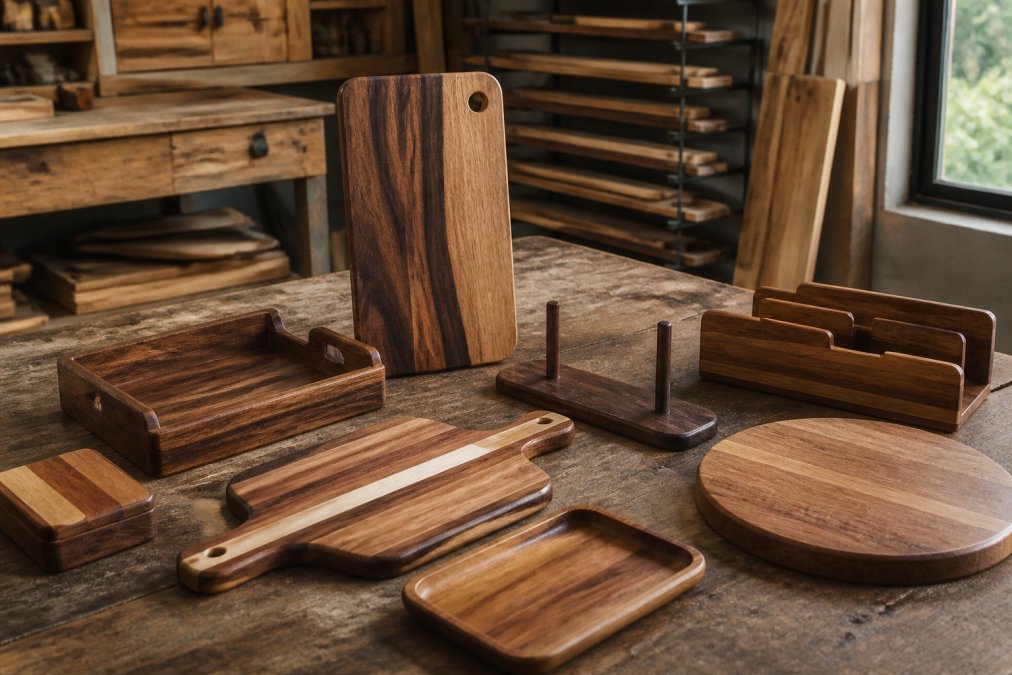
Modern farmhouse wooden pieces feature visible wood grain and natural finishes. The style celebrates imperfections, knots, grain variation, and patina. Pieces are functional first, decorative second. Common examples include charcuterie boards with live edges, valet trays with hand-routed details, floating shelves with visible brackets, and small furniture like side tables or plant stands.
Material Selection for the Style
Reclaimed or aged wood is popular, but new wood finished to look aged also works. Walnut, oak, and mixed hardwoods are common choices. The wood should show natural character, grain patterns, color variation, and subtle imperfections. Pinnacle Woodcraft, LLC specializes in creating custom wooden decor that fits modern farmhouse aesthetics, ensuring pieces match existing style while adding distinctive character.
Finishes and Hardware
Modern farmhouse finishes are typically matte or satin rather than glossy. Oil finishes or matte lacquer are common. Hardware, when visible, is often oil-rubbed bronze or black metal. The wood and craftsmanship should be the star, not competing decorative elements.
Sustainability, Maintenance, and Longevity Indicators
Quality artisan wooden goods are investments built to last decades or longer, making them more sustainable than disposable alternatives.
Sustainable Wood Sourcing
Responsible artisans source wood from managed forests or reclaimed sources, avoiding endangered species and prioritizing domestic hardwoods. Ask makers about their wood sources; transparent craftspeople can explain where materials come from. Locally sourced wood reduces transportation impact, and reclaimed wood eliminates the environmental cost of new harvesting.
Maintenance Requirements
Solid wood requires minimal maintenance. Oil-finished pieces need occasional reapplication every 1-3 years depending on use. Lacquered or varnished pieces may need refinishing after 10-15 years of heavy use. Proper care, keeping items away from direct heat and humidity extremes, wiping spills immediately, using coasters, means a quality piece can last a lifetime.
Longevity Indicators
Solid wood construction is the primary longevity indicator. Tight joinery, quality finishes, and proper wood preparation extend lifespan. Pieces showing signs of quality craftsmanship improve with age; they don't deteriorate like mass-produced items with bubbling veneers, swelling particleboard, and scratched finishes.
Sensory Testing and Structural Integrity Inspection
Beyond visual inspection, you can use your senses to evaluate quality. Weight, sound, smell, and feel all communicate information about craftsmanship.
Weight and Density
Solid wood is heavy. A substantial feel suggests solid construction; light weight suggests veneered or composite materials. Hardwoods are denser and heavier than softwoods. Weight distribution matters too; a well-balanced piece feels stable when moved.
Sound and Resonance
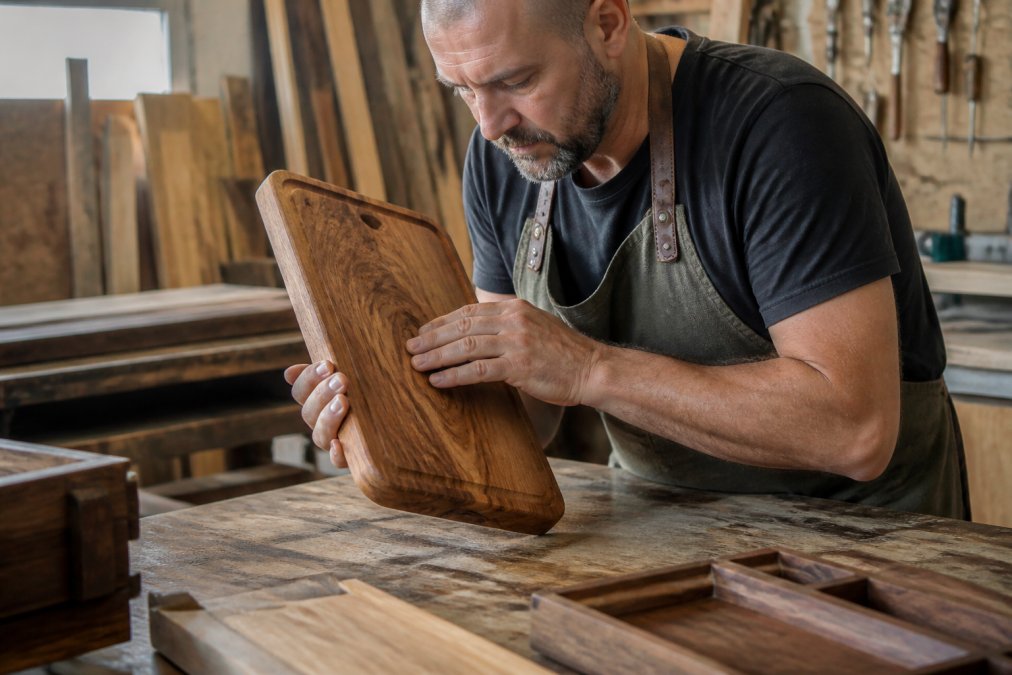
Tap the surface lightly with your knuckles. Solid wood produces a resonant, clear sound; particleboard and MDF sound hollow and dull. Shake the piece gently; it should be solid with no rattling. Joints should not flex or creak, and drawers should slide smoothly without wobbling.
Smell
Fresh wood has a distinctive scent varying by species. Walnut is earthy, cherry is sweet, cedar is aromatic. These natural smells are pleasant and fade over time. Chemical smells indicate heavy staining, poor finishes, or off-gassing from adhesives. Quality finishes smell like wood, not chemicals.
Visual Inspection of Joints and Connections
Joints should be tight with no visible gaps. Run your finger along the joint line; you shouldn't feel a step or gap. Check for cracks radiating from joints; large cracks indicate improper drying. Inspect the back and underside to reveal how much care the maker invested.
Structural Integrity Tests
Apply gentle pressure to different parts. Shelves should not sag, table surfaces should not flex, and legs should not wobble. For drawers, pull them in and out several times; they should slide smoothly and close gently. For chairs or stools, sit on them carefully; they should support weight without creaking or flexing.
Identifying high quality artisan wooden goods requires understanding what separates genuine craftsmanship from mass production. Solid wood, traditional joinery, quality finishes, and careful material selection all point to pieces built to last. When you invest in artisan wooden goods, you're supporting makers who care about their work. At Pinnacle Woodcraft, LLC, every custom wooden piece is built with this philosophy: carefully selected lumber, solid joinery, and hand-sanded finishes that highlight natural wood beauty. If you're ready to commission a one-of-a-kind piece, reach out to Michael at MichaelH@pinnaclewoodcraft.net with your vision and details about what you're imagining.
Frequently Asked Questions
How can you tell the difference between solid wood and veneer in artisan wooden goods?
Solid wood shows consistent grain patterns on all edges and sides, while veneer has a thin wood layer over particleboard or MDF. Check the underside and edges: solid wood will display the same species throughout, whereas veneered pieces show a distinct substrate. Run your hand along edges, solid wood feels uniform, while veneer often reveals a thin seam. High-quality artisan pieces use solid wood construction, which allows for sanding, refinishing, and decades of use.
What specific joinery techniques indicate high-quality craftsmanship in wooden furniture?
Traditional woodworking joinery techniques like dovetail joints, mortise-and-tenon connections, and hand-cut joinery show superior craftsmanship. These joints lock wood pieces together without relying on fasteners or adhesive alone, creating structural integrity that lasts generations. Mass-produced furniture typically uses pocket holes, staples, or dowels. Examine corners and joints closely, visible hand-cut joinery with tight, flush-fitting seams indicates artisan work. These techniques require skill and time, which is why handcrafted pieces command higher value.
How does the finish of a wooden piece indicate its quality?
Quality finishes feel smooth, consistent, and reveal the wood grain naturally. Hand-sanded finishes show subtle color variation and authentic wood character, while mass-produced pieces often have plastic-like, uniform coatings. Run your hand across the surface, artisan finishes should feel silky without rough spots or drips. Look for depth: oil finishes, lacquer, and varnish applied by hand create layers that enhance the wood's natural patina over time. Poor finishes feel sticky, show brush marks, or hide the wood's beauty under heavy coating.
What are the most sought-after wood species for artisan wooden goods?
Hardwoods like walnut, oak, cherry, and maple are prized for their durability, grain patterns, and color variation. Walnut offers rich chocolate tones, oak displays prominent grain, cherry develops deeper color with age, and maple provides fine detail work. Softwoods like pine and cedar are valued for rustic aesthetics and lighter weight. Artisan makers select wood species based on the piece's purpose, desired appearance, and longevity. Avoid pieces made from particleboard or MDF, which lack the density and craftsmanship of solid wood and cannot be refinished or repaired.
Why is kiln-dried lumber preferred for artisan wooden goods?
Kiln-dried lumber has moisture removed in a controlled environment, preventing warping, cracking, and movement after the piece is finished. This process ensures structural stability and longevity. Improperly dried wood develops knots, splits, and dimensional changes that damage joinery and finish. Artisan woodworkers use kiln-dried stock because it allows precise joinery, accepts finish evenly, and maintains its shape for years. When inspecting a piece, look for signs of wood movement, gaps at joints, surface cracks, or loose hardware, which indicate the wood was not properly dried before construction.
What should I look for to confirm a piece is handcrafted rather than mass-produced?
Handcrafted pieces show subtle irregularities that reflect the maker's hand: slight variations in grain alignment, unique wood color distribution, visible tool marks on edges, and individual character in joinery. Each piece differs slightly from others, whereas mass-produced furniture is identical across units. Examine hardware, artisan pieces often feature quality brass or steel fasteners, while cheap furniture uses thin, stamped metal. Ask about the maker's process and request photos of the workshop. Authentic artisans welcome questions and can describe their methods, wood selection, and quality standards in detail.
How can sensory testing help identify quality in wooden goods?
Touch reveals finish quality, run your hand across the surface for smoothness and consistency. Smell can indicate wood type and finish: authentic wood has a natural scent, while particleboard or MDF smells synthetic or chemical. Weight matters: solid hardwood feels substantial, while veneer over particleboard feels light and hollow. Tap the piece gently and listen, solid wood produces a clear, resonant sound, while particleboard sounds dull and flat. These sensory cues combined with visual inspection help you distinguish artisan craftsmanship from mass production without specialized tools.
What maintenance indicators suggest a wooden piece will last for years?
Quality artisan pieces are built for longevity and refinishing. Solid wood construction allows sanding and recoating when the finish wears. Check if the piece shows signs of proper wood movement accommodation, expansion gaps around panels or floating tops. Examine joinery for tightness and quality, loose joints indicate poor craftsmanship. Ask about finish type: oil finishes and lacquer can be touched up or reapplied, while some plastic coatings cannot. Pieces made with traditional techniques and solid joinery maintain their value and function for decades, becoming heirlooms rather than disposable furniture.
This article was written using GrandRanker