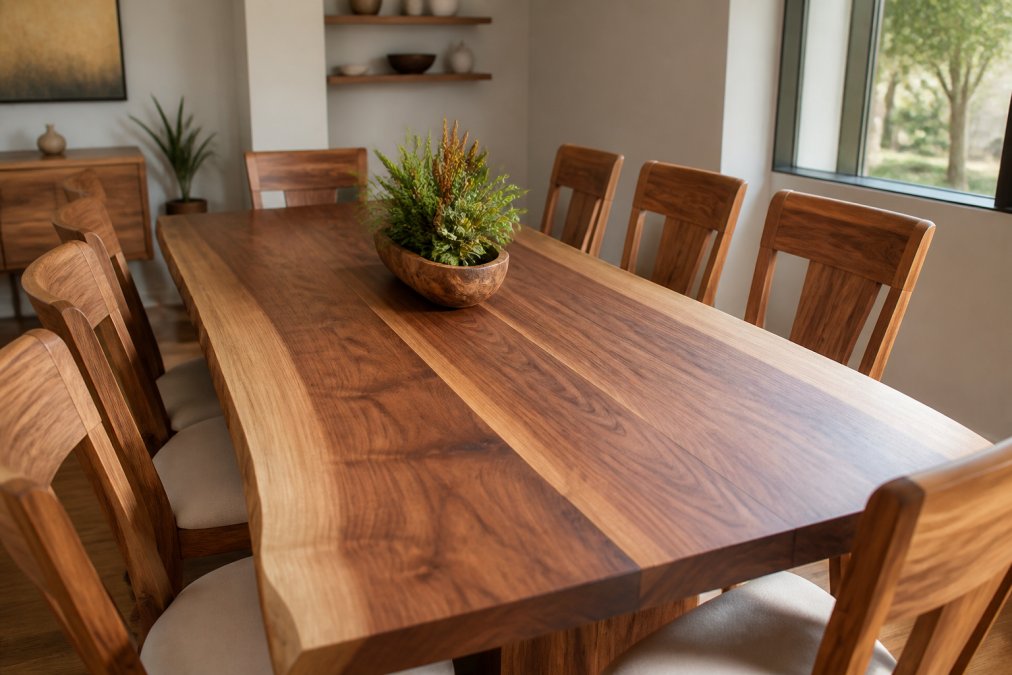
 ultimate-guide
Is Custom Wood Furniture Worth It? A 2026 Guide
Table of Contents
- Is Custom Wood Furniture Worth It: The Real Calculation
- Benefits of Solid Wood Furniture vs. Mass-Produced Alternatives
- Custom Furniture Cost Breakdown: What You're Actually Paying For
- Durability and Longevity: Why Solid Hardwood Outlasts Plywood and MDF
- Investment Value and Resale Potential
- How to Commission Custom Furniture: The Process and Timeline
- Red Flags to Avoid When Choosing a Custom Furniture Maker
- Conclusion: Making Your Decision
Is Custom Wood Furniture Worth It: The Real Calculation
The question isn't whether custom wood furniture is worth it, it's whether it's worth it for you. Custom wood furniture costs more upfront than mass-produced alternatives, but upfront cost tells only half the story. The real calculation involves durability, longevity, resale value, and how long you actually keep the piece.
For most homeowners seeking pieces that outlast trends and improve with age, the answer is yes. But the math only works if you understand what you're paying for and commit to keeping the piece long enough to recoup the investment.
Benefits of Solid Wood Furniture vs. Mass-Produced Alternatives
Solid hardwood furniture fundamentally performs differently than mass-produced counterparts. Mass-produced furniture typically uses plywood or MDF (medium-density fiberboard), which cost less to manufacture but degrade over time. Plywood veneers peel, MDF swells when exposed to moisture, and particleboard breaks under stress. These materials aren't designed to last decades.
Solid hardwood adapts to its environment and is repairable. A craftsman can sand, refinish, or reinforce a solid wood piece. You can't repair engineered materials, you replace them.
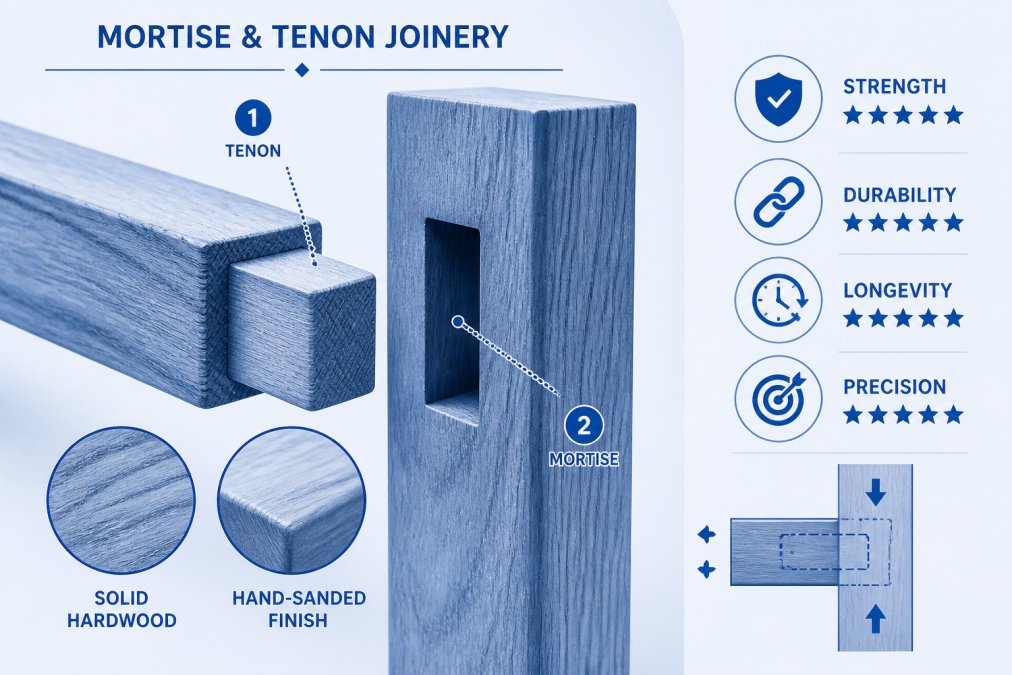
Custom furniture makers use joinery, connecting wood pieces with precision-cut joints rather than screws and glue alone. This distributes stress across the entire piece, which is why antique wooden furniture from the 1800s still functions perfectly. A solid wood table with proper joinery can serve multiple generations, while a plywood table typically needs replacement within 5-10 years. When calculated over 30 years, the custom piece often costs less per year than mass-produced alternatives you've replaced three times.
Custom furniture also offers design flexibility that mass production can't match. You're not limited to standard dimensions, finishes, or styles. Custom furniture adapts to your space rather than forcing you to adapt your space to available sizes.
Custom Furniture Cost Breakdown: What You're Actually Paying For
Understanding custom furniture pricing requires breaking down where your money actually goes.
Material Quality and Wood Selection
The wood itself represents a significant portion of cost. A craftsman sources specific species based on your design, appearance preferences, and intended use. Walnut costs more than oak, and exotic hardwoods cost substantially more than domestic options. Beyond species, there's the grading and selection process. A furniture maker inspects each board for grain pattern, color consistency, and structural integrity, rejecting pieces with hidden defects. This selective process means waste is built into the cost of the finished piece.
Finishing materials also matter. Quality finishes require multiple coats of stain, sealer, and topcoat. Some makers use hand-rubbed oil finishes that take weeks to cure properly. Premium finishes cost more upfront but protect the wood and improve with age.
Craftsmanship and Labor
Labor is the largest cost component in custom furniture. A skilled craftsman earns their hourly rate through years of training and experience. Creating a custom piece involves design consultation, material sourcing, milling, shaping, joinery, finishing, and quality inspection. A simple custom table might require 40-60 hours of skilled labor, while a complex piece can exceed 100 hours.
Custom makers also carry overhead costs: workshop maintenance, tools, equipment, insurance, utilities, and specialty materials purchased in small quantities without bulk discounts. These costs are distributed across fewer pieces than a factory produces, so the per-piece cost is higher.
Design and Customization
Custom design work carries its own cost. Someone with expertise spends time understanding your vision, creating sketches or renderings, and refining the design. Non-standard dimensions, special joinery, unusual finishes, and integrated hardware add complexity that increases labor time.
Durability and Longevity: Why Solid Hardwood Outlasts Plywood and MDF
Solid hardwood's durability comes from its cellular structure. Wood fibers are naturally strong and flexible. When wood dries, it shrinks; when it absorbs moisture, it expands. A well-made piece accommodates this movement through proper joinery and finish. This is why wooden furniture from centuries ago still functions.
Plywood fails because the veneer eventually separates from the substrate. MDF fails because it swells irreversibly when moisture penetrates the surface. Particleboard fails because it has no structural integrity once fasteners loosen. These materials aren't designed for repair.
A hand-applied oil finish on solid wood can be refreshed by sanding and recoating. A polyurethane finish on plywood can't be fixed. This repairability is a massive advantage for solid wood over time.
A solid wood piece in a heated home with seasonal humidity changes will move slightly but adapts. The same conditions cause plywood to buckle and MDF to swell permanently. This is why custom solid wood furniture is common in older homes, surviving where engineered materials would have failed decades ago.
The craftsmanship in joinery directly impacts longevity. A mortise and tenon joint distributes stress more effectively than a screw connection. Dovetail joints lock pieces together without relying on fasteners that can loosen. These traditional methods exist because they work across centuries of use.
Investment Value and Resale Potential
Custom wood furniture holds value in ways mass-produced pieces don't. A mass-produced table loses 60-80% of its value immediately. Resale markets are flooded with identical pieces. Custom furniture holds value because it's unique and durable, typically retaining 50-70% of its original value.
This matters for resale. If you eventually sell the piece, you recover a meaningful portion of your investment. More importantly, the piece functions as a long-term asset rather than consumable goods.
Heirloom quality is a real phenomenon. Custom pieces built with solid wood and traditional joinery become more valuable to owners over time, not financially but sentimentally. A table your grandmother commissioned becomes a family piece.
How to Commission Custom Furniture: The Process and Timeline
Commissioning custom furniture is straightforward if you understand the process.
Initial Consultation: You contact the maker with a general idea of what you want. The maker asks clarifying questions about your space, how you'll use the piece, budget parameters, and timeline.
Email your idea and a few details to MichaelH@pinnaclewoodcraft.net →
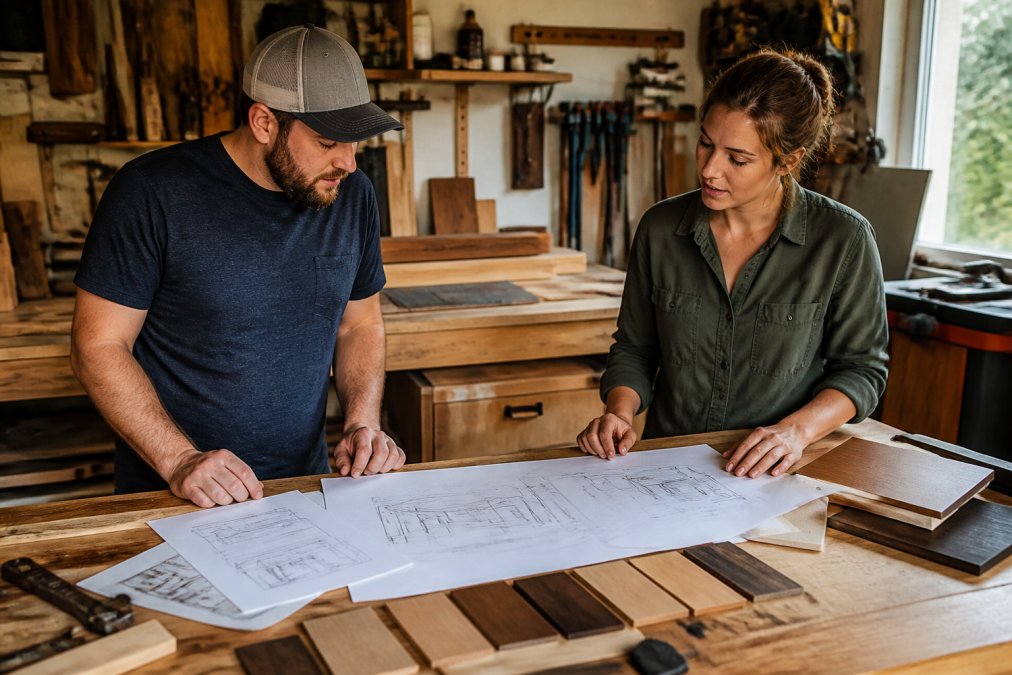
Design Phase: The maker creates sketches or renderings based on your input. You review options and provide feedback until the design matches your vision. Expect 2-4 weeks for this phase.
Material Selection: Once the design is finalized, the maker sources materials, selecting specific wood species, grade, and finish options. This phase typically takes 1-2 weeks.
Construction: The actual building begins. A simple table might take 4-6 weeks; a complex piece might take 3-4 months.
Finishing: After construction, the piece is sanded, stained, and finished. Hand-applied finishes take longer but look better. Multiple coats and curing time add weeks to the timeline.
Quality Inspection and Delivery: The maker inspects the finished piece, makes final adjustments, and arranges delivery. Shipping custom furniture requires careful packaging.
The entire process from initial contact to delivery usually takes 2-4 months for standard pieces. Complex designs can take 4-6 months. Plan ahead if you need a piece for a specific date.
Red Flags to Avoid When Choosing a Custom Furniture Maker
Not all custom furniture makers are equal. Knowing what to watch for protects your investment.
Unrealistic Timelines: If a maker promises a complex custom piece in 2-3 weeks, they're rushing the work or not actually building it custom. Quality craftsmanship takes time.
Vague About Materials: A quality maker can tell you exactly what wood species they're using and why. If they avoid discussing material specifics, they're probably using cheaper alternatives than you expect.
No Portfolio or References: Ask to see previous work and customer references. You're paying for expertise, verify it exists.
Unclear Pricing Structure: Understand what's included in the quoted price. Does it cover design, finishing, and delivery? Are there additional charges for revisions? Get everything in writing.
No Process Transparency: Quality makers explain how they source materials, what joinery methods they use, and how they finish pieces. If a maker is vague about their methods, question why.
Pressure to Decide Quickly: A maker who pressures you to commit immediately is prioritizing their schedule over your satisfaction.
Unrealistic Prices: A price that seems too low suggests corners are being cut. Research comparable work to establish a reasonable range.
Conclusion: Making Your Decision
Custom wood furniture is worth the investment if you prioritize durability, uniqueness, and long-term value. The upfront cost is real, but the cost-per-year calculation often favors custom pieces that last 30+ years over mass-produced alternatives you replace every 5-10 years.
The decision comes down to three factors: your budget, your timeline, and your commitment to keeping the piece. If you can afford the initial investment, can wait for quality craftsmanship, and plan to use the piece for years, custom furniture delivers exceptional value.
If you're ready to commission a custom piece, Pinnacle Woodcraft, LLC specializes in turning your vision into handcrafted reality. From custom charcuterie boards and valet trays to small furniture projects, every piece is built with carefully selected lumber, solid joinery, and hand-sanded finishes that highlight the natural beauty of the wood. Email your idea and a few details to MichaelH@pinnaclewoodcraft.net to start the conversation about your custom piece.
Frequently Asked Questions
How much does custom wood furniture typically cost?
Custom wood furniture pricing depends on several factors: wood type (solid hardwood costs more than plywood or MDF), piece size, design complexity, finish quality, and timeline. A small custom item like a charcuterie board differs significantly from a full dining table. Rather than estimating, contact a craftsman directly with your specifications for an accurate quote. Pricing reflects the materials, labor, and craftsmanship involved in creating a one-of-a-kind piece built to last decades.
Is custom wood furniture more expensive than mass-produced?
Yes, typically. Mass-produced furniture uses plywood or MDF with machine assembly, which cuts upfront costs. Custom pieces use solid hardwood, hand-selected lumber, and skilled joinery, increasing initial price. However, cost-per-use over 20+ years often favors custom furniture. A mass-produced piece may need replacement in 5-7 years, while solid wood can last generations. The investment value and resale potential of custom pieces also offset the higher entry price for many buyers.
What makes solid hardwood better than plywood or MDF for custom furniture?
Solid hardwood offers superior durability, longevity, and structural integrity. Plywood consists of thin wood veneers glued together; MDF is compressed wood fibers. Both deteriorate faster, especially under humidity or regular use. Solid hardwood resists warping, supports heavier loads, and can be refinished or repaired indefinitely. With proper maintenance, hardwood furniture develops character over time and maintains or increases in value, while plywood and MDF typically cannot be restored once damaged.
How long does it take to get custom furniture made?
Timeline varies based on the maker's current workload, piece complexity, and your design finalization process. Simple items may take weeks; larger or intricate pieces can take months. Communicate your deadline upfront when commissioning. Quality craftsmanship cannot be rushed, artisans prioritize joinery, finish quality, and material selection over speed. Discuss realistic timelines during your initial consultation to ensure expectations align with the maker's schedule and your needs.
This article was written using GrandRanker