 how-to
How Long Does Custom Woodworking Take: A Timeline
Table of Contents
- How Long Custom Woodworking Projects Actually Take
- Factors Affecting Woodworking Project Duration
- Breaking Down the Custom Woodworking Build Timeline
- How to Commission Custom Furniture and Manage Timeline Expectations
- Hidden Time Costs in Custom Woodworking
- Small Pieces vs. Large Furniture: How Project Scope Changes Your Timeline
- Why Custom Woodworking Takes Longer Than Mass-Produced Furniture
- Conclusion
Last Updated: August 6, 2026
How Long Custom Woodworking Projects Actually Take
Custom woodworking isn't fast. How long does custom woodworking take depends on multiple overlapping factors that most people underestimate. A typical custom woodworking project takes anywhere from 8 to 18 weeks from initial design to delivery, though that timeline compresses or expands dramatically based on project scope, material availability, and your woodworker's current workload.
At Pinnacle Woodcraft, LLC, we work with clients across the United States who often discover that real craftsmanship requires patience. Rushing custom woodworking doesn't produce better results, it produces shortcuts. This guide breaks down exactly where the time goes, what you can control, and what you can't.
Factors Affecting Woodworking Project Duration
Project Complexity and Design Phase
Project complexity is the first variable determining your timeline. A simple cutting board takes far less time than a hand-carved cabinet with inlaid details. Complexity isn't just visual intricacy, it's about joinery points, precision required, and moving parts.
A small charcuterie board might clear design in one week. A custom dining table with mortise-and-tenon joinery and intricate inlays can spend 2-3 weeks in design alone. During this phase, your woodworker creates shop drawings, refines measurements, and plans the exact construction sequence.
Client feedback loops extend this phase. Each revision requires redrawing sections, recalculating material needs, and sometimes rethinking the entire approach.
Material Sourcing and Lead Times
Quality lumber doesn't always sit on a shelf waiting for the right project. Domestic hardwoods like walnut, oak, and cherry typically have 2-3 week lead times if your woodworker maintains inventory. Exotic woods, reclaimed materials, or specific grain patterns can stretch to 4-6 weeks or longer.
Sourcing also includes hardware, handles, hinges, and fasteners. A custom piece often requires hardware matching the aesthetic. Vintage brass pulls instead of standard stainless steel add another 1-2 weeks.
Shop Capacity and Current Workload
A woodworker with a full order book won't bump existing clients to rush your project. Most quality shops work on a first-come, first-served basis. If the shop is booked 12 weeks out, your project starts after those 12 weeks.
During peak seasons, late fall for holiday gifts, spring for home renovations, lead times stretch. A project that might normally take 10 weeks could take 14 weeks simply because the shop is managing multiple builds simultaneously.
Slower seasons offer a competitive advantage. Commissioning a piece in January or August might move you faster through the queue.
Breaking Down the Custom Woodworking Build Timeline
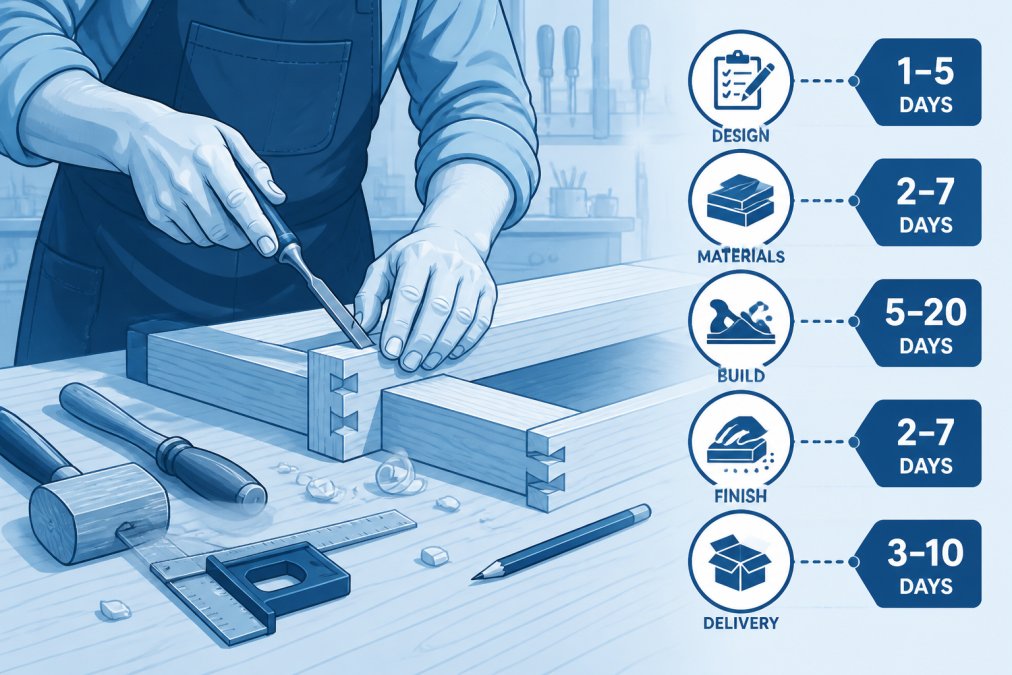
Step 1: Design and Shop Drawing Creation (1-2 weeks)
Your vision becomes a blueprint during this phase. Your woodworker listens to your idea, asks clarifying questions, and creates detailed shop drawings specifying every dimension, joinery method, and finishing approach.
Shop drawings include elevation views, section cuts, and detailed joinery diagrams. The woodworker calculates wood movement, plans for seasonal expansion and contraction, and decides which joinery techniques will deliver strength and longevity.
Most woodworkers require approval before moving forward. This approval step typically adds 3-5 days because it requires your feedback.
Step 2: Material Procurement and Preparation (2-4 weeks)
Once design is locked, material sourcing begins. Your woodworker orders lumber, hardware, and finishing supplies. A quality supplier might take 1-2 weeks to deliver.
After materials arrive, preparation starts. Raw lumber must acclimate to your shop's humidity for at least one week. This acclimation step is non-negotiable. Wood moves with humidity changes. Skipping it causes warping or cracking as the piece adjusts to your home's environment.
Milling follows acclimation. Your woodworker planes lumber to thickness, mills it to width, and cuts pieces to rough length. A craftsman carefully selects which pieces go where, thinking about grain continuity and color matching.
Step 3: Construction and Assembly (2-6 weeks)
This is the longest phase for most projects. Construction time varies based on joinery complexity. A simple butt-jointed frame takes days. Mortise-and-tenon joinery, dovetails, or complex inlays consume weeks.
Traditional joinery requires hand tools, careful measurement, and experience. Each joint must fit perfectly. Assembly happens in stages, subassemblies come together first, then major components are joined. The entire process is methodical.
Step 4: Finishing and Curing (1-3 weeks)
Quality custom furniture receives hand-sanded surfaces, multiple finish coats, and careful attention to wood grain and natural color.
Sanding can take several days, starting with coarse grit and progressively moving to finer grits. Finishing products require drying time between coats. A three-coat finish means at minimum 72 hours of drying, plus additional time for final buffing and inspection.
Many finishes continue hardening for days or weeks after application.
Step 5: Installation and Delivery (1-2 weeks)
A handmade piece requires careful packing to prevent damage during transit. Shipping across the United States takes 5-7 days via standard freight. Your woodworker coordinates with freight carriers, manages insurance, and tracks the shipment.
Installation might be simple or complex depending on the piece. Some require on-site finishing touches or adjustments.
Email your idea and a few details to [email protected] →
How to Commission Custom Furniture and Manage Timeline Expectations
Starting the Conversation: What You Need to Share
Be prepared to share specifics. Show photos of pieces you like, not necessarily the exact piece you want, but the aesthetic direction. Share the space where your piece will live, dimensions matter. Share your timeline needs honestly. If you need something in 8 weeks, say so. Your woodworker can then tell you if that's realistic.
Discuss budget openly. Custom woodworking pricing depends on wood species, complexity, size, and finish. A realistic budget helps your woodworker suggest materials and approaches that deliver the best value.
Understanding Custom Furniture Lead Times
Custom furniture lead times reflect the actual time required to do work properly. When a woodworker quotes 12-16 weeks, they're accounting for design, material sourcing, construction, finishing, and delivery.
Some shops offer expedited timelines for premium fees. A rush order might compress a 14-week project into 10 weeks, but rush fees can be substantial, sometimes 20-30% above standard pricing.
The most reliable timeline is the standard one. Your woodworker has built their schedule around sustainable pacing.
Client Revisions and Approval Cycles
Revisions happen. Each revision adds time. First revision: usually 3-5 days. Second revision: another 3-5 days. By the third revision, you're adding 1-2 weeks to your timeline.
To minimize revision time, get clear about what you want before the initial design phase. Decisiveness compresses timelines.
| Phase | Typical Duration | Key Variables |
|---|---|---|
| Design & Shop Drawings | 1-2 weeks | Complexity, revision cycles |
| Material Sourcing | 2-4 weeks | Wood availability, hardware sourcing |
| Construction & Assembly | 2-6 weeks | Joinery type, project size |
| Finishing & Curing | 1-3 weeks | Finish type, drying requirements |
| Installation & Delivery | 1-2 weeks | Shipping distance, installation needs |
| Total Timeline | 8-18 weeks | All factors combined |
Hidden Time Costs in Custom Woodworking
Approval wait time. You receive shop drawings and don't respond for a week. That week is lost. Multiply this across multiple approval cycles and you've added a month to your timeline.
Material acclimation. Wood must sit in your woodworker's shop, adjusting to local humidity, before milling begins. This can take 1-3 weeks and can't be rushed.
Seasonal delays. Holiday season and spring renovation season create bottlenecks. Plan accordingly.
Unexpected material issues. Lumber arriving with defects or cracks requires replacement orders, adding 1-2 weeks.
Weather and humidity swings. Extreme changes can affect wood movement during construction, requiring your woodworker to slow down and monitor pieces.
Small Pieces vs. Large Furniture: How Project Scope Changes Your Timeline
Small pieces (cutting boards, valet trays, small boxes): These compress into 6-10 weeks. Design is straightforward. Material sourcing is quick. Construction is fast with fewer joinery points.
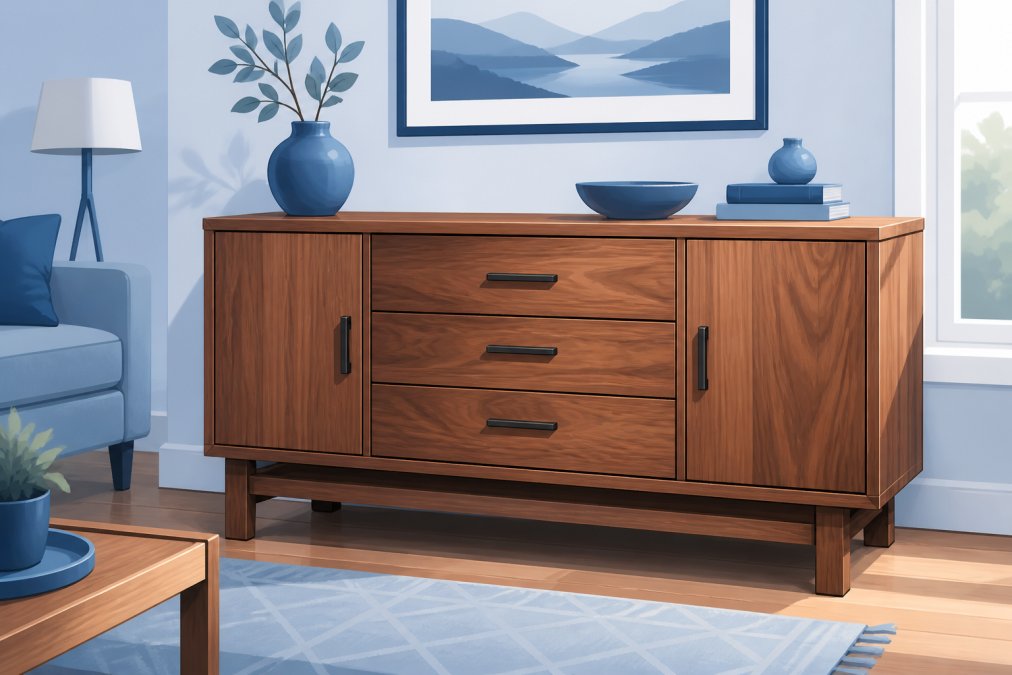
Medium pieces (side tables, small shelves, small cabinets): These typically need 10-14 weeks. Design becomes more complex. Material sourcing takes longer. Construction involves more joinery.
Large pieces (dining tables, large cabinets, entertainment centers): These consume 14-20 weeks or longer. Design is complex. Material sourcing becomes a significant bottleneck. Construction is lengthy with more components and joinery points.
Why Custom Woodworking Takes Longer Than Mass-Produced Furniture
Mass-produced furniture moves fast because it's optimized for speed. Custom woodworking is the opposite. Every piece is unique. Your woodworker designs specifically for your dimensions and aesthetic. Materials are hand-selected. Joinery is cut individually. Finishing is often hand-applied.
This approach produces superior results. Your piece will last decades. The joinery is stronger. The finish is more beautiful. Speed and quality are inversely related in custom work. You can have fast, or you can have excellent. You can't have both.
The difference shows up in longevity. A custom-built table with proper joinery will serve you for generations.
Custom woodworking timelines frustrate people accustomed to instant gratification. But the wait produces something mass production never can: a piece built specifically for you, by someone who cares about the craftsmanship. If you're ready to commission a custom piece and want a realistic timeline, email Michael at [email protected] with your idea and a few details. We'll give you an honest assessment of how long your project will take and what's involved in bringing your vision to life. Email Michael at [email protected] to start the conversation.
Frequently Asked Questions
How long does it typically take to get custom furniture made?
Custom woodworking projects typically take 4 to 16 weeks from initial design to delivery, depending on complexity, materials, and the craftsperson's current workload. Small pieces like charcuterie boards or valet trays may take 4-6 weeks, while larger furniture projects can extend to 12-16 weeks. The design phase alone usually takes 1-2 weeks, followed by material sourcing, construction, finishing, and delivery. Communicating your timeline needs upfront helps the woodworker prioritize your project appropriately.
What factors affect the lead time of custom woodworking projects?
Several factors influence custom furniture lead times: design complexity determines how long shop drawings take, wood species availability affects material procurement, project scope dictates construction duration, and the shop's current workload impacts when your project starts. Finishing and curing time depends on the finish type selected. Client approval cycles and revisions can extend timelines if changes are requested during the build. Delivery logistics, especially for customers far from the workshop, add 1-2 weeks. Communicating specific deadlines early helps the craftsperson manage expectations.
Why do custom woodworking projects take longer than store-bought furniture?
Custom pieces require time for design collaboration, precise shop drawings, and careful material selection, steps mass-produced furniture skips entirely. Each custom piece uses solid joinery and hand-sanded finishes rather than factory assembly-line processes. Wood acclimation and proper curing ensure the finished piece won't crack or warp, a step factories often rush. Craftspeople also build one piece at a time with attention to detail, rather than producing hundreds simultaneously. This approach creates durable, bespoke items that outlast generic alternatives by years, making the longer timeline a worthwhile investment.
Can I get custom woodworking done quickly if I have a tight deadline?
Tight deadlines are possible but depend on project scope and the craftsperson's availability. Simple pieces like small serving boards or decorative items may be expedited within 4-6 weeks if the shop has capacity. Complex furniture projects with custom joinery or intricate finishes cannot be rushed without compromising quality. The design phase cannot be skipped, accurate shop drawings prevent costly mistakes. Communicating your deadline upfront allows the woodworker to assess feasibility and prioritize your project if possible. Avoid requesting changes mid-build, as revisions extend timelines significantly.
This article was written using GrandRanker