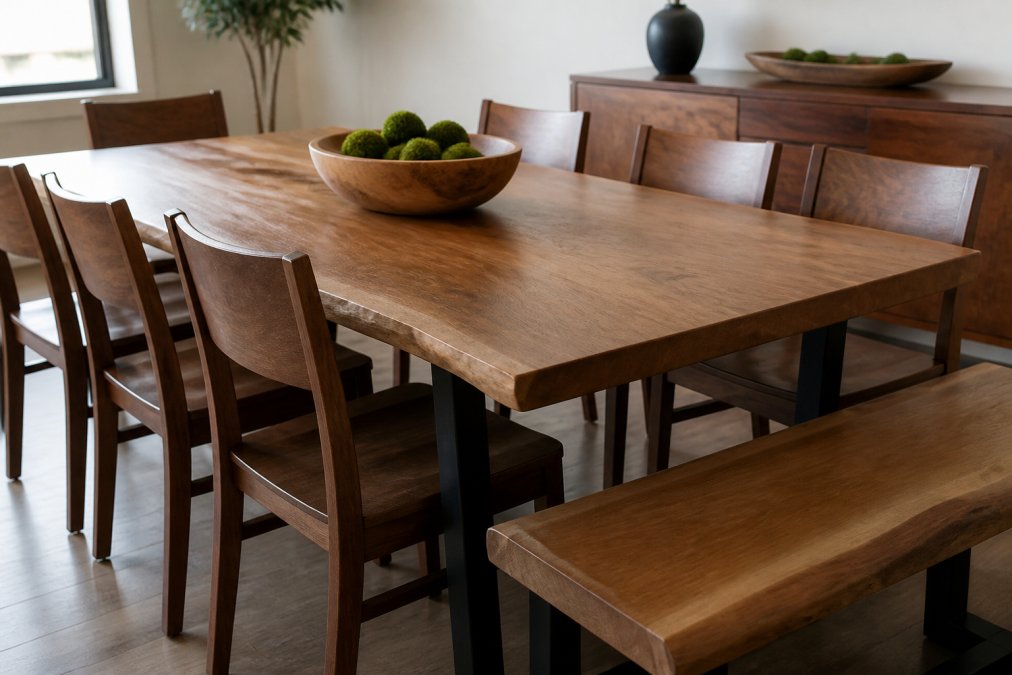
 ultimate-guide
Buy Custom Wooden Furniture Online 2026: A Buyer's Guide
Table of Contents
- Why Buy Custom Wooden Furniture Online in 2026
- Top Custom Wood Furniture Makers in the USA: What to Look For
- The Step-by-Step Custom Furniture Design Process Online
- Understanding the Cost of Custom Wooden Furniture
- Shipping Custom Furniture: What to Expect from Order to Doorstep
- Long-Term Care for Your Custom Wooden Furniture
- How to Buy Custom Wooden Furniture Online in 2026 Without Regret
- Conclusion
Last Updated: August 1, 2026
Deciding to buy custom wooden furniture online in 2026 is a smart home investment, but only if you know how to separate genuine artisan work from factory-dressed imitations. At Pinnacle Woodcraft, LLC, we hear from buyers who ordered "handcrafted" pieces elsewhere and received particleboard with thin veneer. Below, we'll show you exactly how to find real craftsmanship, configure a piece from scratch, and receive it without damage or regret. The custom wood furniture market has grown substantially as homeowners reject mass-produced decor in favor of pieces built to their exact specifications.
Why Buy Custom Wooden Furniture Online in 2026
Custom wooden furniture is a made-to-order piece built from solid wood to a buyer's specific dimensions, wood species, stain color, and design requirements. If a seller cannot tell you which species of hardwood they used, how the joinery is constructed, or what finish was applied, the piece is not truly custom.
Homeowners now have direct access to artisan shops across the country without leaving their zip code. A family in California can commission a walnut dining table from a craftsman in Texas, receive a detailed design consultation by email, and track production from raw lumber to delivery. According to American Home Furnishings Alliance industry overview, consumer demand for domestically made, customizable furniture has trended upward as homeowners prioritize durability and origin transparency.
Lead times at quality shops are lengthening as demand grows. If you need a piece for a wedding gift or seasonal refresh, starting the conversation now is the practical move.
Top Custom Wood Furniture Makers in the USA: What to Look For
The best custom wood furniture makers share four non-negotiable traits: they use solid hardwood throughout, they can explain their joinery methods, they show real in-progress photos of your specific order, and they communicate lead times honestly before you pay.
Pinnacle Woodcraft, LLC is our top pick for buyers who want a genuine small-shop experience. Based in Corpus Christi, Texas, this family woodworking shop handles every step in-house, from selecting the lumber to the final hand-sanded finish. There is no particleboard, no shortcuts, and no outsourcing. The shop's strength is personal communication: you email your idea, and a real craftsman responds.
| Criteria | What to Look For | Red Flag |
|---|---|---|
| Wood species | Named hardwood: walnut, oak, alder, pine | "Wood composite" or no species listed |
| Joinery | Mortise-and-tenon, dovetail, or dowel described | "Assembled" with no method stated |
| Customization | Dimensions, stain color, species options | Fixed SKUs with no variation |
| Lead time | Specific week range given upfront | "Ships in 1-2 weeks" for handcrafted pieces |
| Verification | Workshop photos, in-progress updates | Only stock or lifestyle photography |
| Return policy | Clear policy with damage exceptions | All-sales-final with no caveats |
How to Verify Real Craftsmanship Before You Buy
Ask for three things: a photo of the raw lumber before it is milled, a photo of the joinery before assembly, and a photo of the finish being applied. Any legitimate artisan shop has these images. A factory operation does not.
Check the shop's social media for workshop footage. Real craftsmen post sawdust and imperfect early cuts because that is the honest reality of the work. Polished lifestyle photography with no process shots is a signal worth noting.
Solid Wood vs. Engineered Materials: Why It Matters
Solid hardwood can be refinished, repaired, and passed down. Engineered wood products, including MDF and particleboard, swell when exposed to moisture, cannot be sanded or re-stained, and have a finite lifespan.
For custom furniture, solid wood is the only material that justifies the price premium. The joinery holds longer, the surface responds to maintenance, and the piece ages with character. As documented in U.S. Forest Service wood properties guide, different hardwood species carry distinct grain patterns, hardness ratings, and finishing characteristics that affect both appearance and durability.
A common mistake is accepting "solid wood construction" language without clarification. Ask specifically: "Is every surface, including the top, shelves, and sides, solid hardwood?"
The Step-by-Step Custom Furniture Design Process Online
The custom furniture design process online follows a clear sequence, and knowing each stage prevents scope creep and missed deadlines.
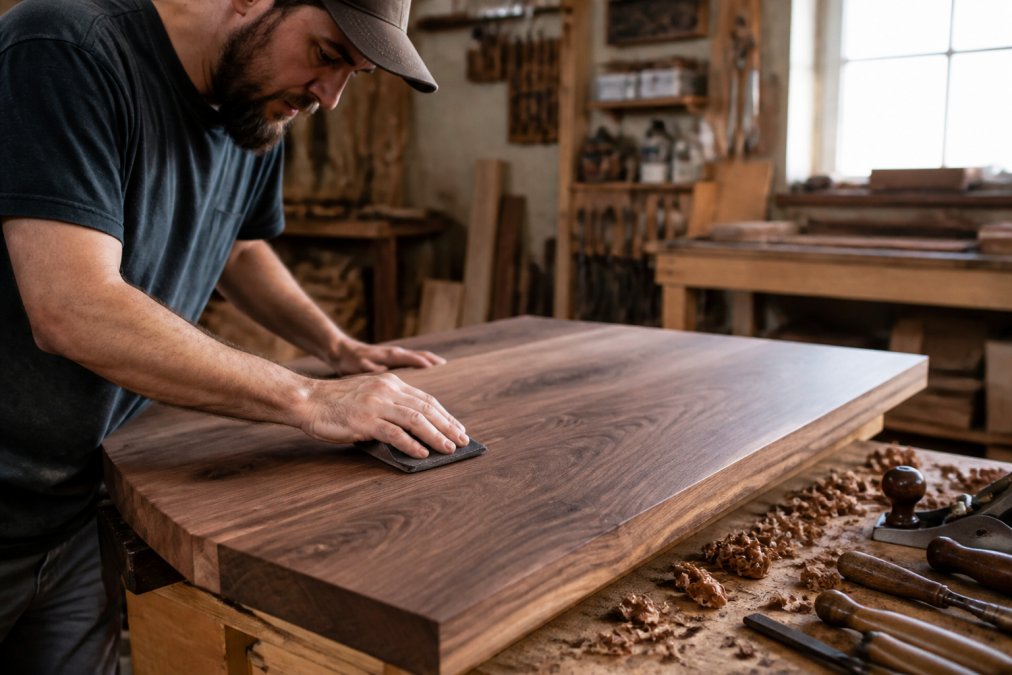
Step 1: Submit your idea. Write down what you need, where it will live, and any dimensions you know. A rough sketch or photo of your space is enough to start.
Step 2: Consultation. The craftsman responds with questions about wood species, stain color, joinery style, and finish preference.
Step 3: Quote and timeline. You receive a written quote covering materials, labor, and shipping, along with a specific lead time. Confirm cancellation fees and the payment schedule.
Step 4: Production. Lumber is selected and milled. You should receive at least one in-progress photo.
Step 5: Finishing and quality check. Hand-sanded finishes are applied in stages. A final inspection confirms the piece matches the agreed spec.
Step 6: Packing and shipping. Custom pieces require purpose-built crating or heavy blanket wrapping, not standard cardboard boxes.
Choosing Wood Species, Stain Color, and Custom Dimensions
Wood species selection most influences the final look and longevity of a custom piece. Walnut is the benchmark for premium furniture: dark, tight-grained, and naturally resistant to warping. Oak is more affordable and takes stain evenly. Alder is softer and lighter, well-suited for painted or lightly stained pieces. Pine is the most economical hardwood option and carries a pronounced grain that works well in farmhouse interiors.
Stain color should be chosen against a sample of your actual species. Request a physical or photographed swatch before approving the finish.
For custom dimensions, measure your space twice and add clearance for foot traffic, drawer pull depth, and door swing.
Matching Custom Pieces to Your Interior Style
Custom furniture is most valuable when it resolves a design problem a stock piece cannot solve. A modern farmhouse interior needs the warmth of natural wood grain without heavy carvings. A home office needs proportions that work with a specific wall length. A bedroom needs a nightstand that clears a particular baseboard heater.
Share photos of your existing furniture, wall color, and flooring with your craftsman. An experienced woodworker will tell you which species and stain combination reads as warm without being heavy, or which profile works with your existing trim style.
Understanding the Cost of Custom Wooden Furniture
Pricing for custom wooden furniture depends on species, dimensions, joinery complexity, finish type, and the shop's labor rate. What you are paying for is the time a skilled person spent selecting, milling, joining, and finishing wood by hand.
Request itemized quotes from at least two shops so you can compare like for like: same species, same dimensions, same finish. The line items to watch are material cost, labor hours, and shipping.
Contact Pinnacle Woodcraft, LLC directly at [email protected] with your project details for an accurate quote. Pricing depends on the specific piece, wood species, and dimensions you need.
Shipping Custom Furniture: What to Expect from Order to Doorstep
Shipping is where many custom furniture orders go wrong, and it is almost always a packaging failure. A solid walnut table that survives a five-hour drive in a pickup truck can be destroyed by a poorly braced cardboard box on a two-day freight route.
Reputable shops use purpose-built wooden crates for large furniture, heavy blanket wrapping with corner protection for mid-size pieces, or double-walled cardboard with internal foam blocking for smaller items. Ask your shop which method they use before you pay.
For buyers outside the shop's home state, freight shipping on larger pieces typically requires a delivery appointment. Confirm whether the quote includes inside delivery or curbside only.
According to Federal Motor Carrier Safety Administration freight shipping consumer guide, consumers have the right to inspect for damage before signing the delivery receipt. Never sign a clean receipt for a damaged box.
Lead Times, Cancellation Fees, and Return Policies
Lead times for handcrafted custom furniture typically run four to twelve weeks depending on shop volume and piece complexity. A shop quoting two weeks for a solid walnut dining table is either running pre-built inventory or cutting corners on drying time.
Cancellation fees exist because custom work begins immediately after deposit. Once lumber is milled to your dimensions, it has no resale value. Expect cancellation fees to scale with production progress.
Return policies for custom pieces are necessarily limited. A piece built to your specifications cannot be restocked. Most reputable shops will address documented defects or structural failures, but will not accept returns because you changed your mind about the color.
Long-Term Care for Your Custom Wooden Furniture
Solid wood furniture requires straightforward maintenance. The most common mistake is placing it in direct sunlight or near a heating vent. Wood expands and contracts with humidity and temperature changes. A consistent indoor humidity level between 35% and 55% is the practical target.
For cleaning, a slightly damp cloth removes dust without damaging the finish. Avoid silicone-based furniture sprays; they build up over time and make refinishing difficult. For oil or wax finishes, periodic reapplication every six to twelve months restores the surface.
Surface scratches on solid wood can be addressed with a touch-up marker matched to the stain, or by light sanding and spot refinish. This is the core advantage of solid wood: the repair options are real and lasting. As noted by Wood Magazine's finishing and care resource, the finishing system used during production determines which maintenance products are compatible.
How to Buy Custom Wooden Furniture Online in 2026 Without Regret
The buyers who regret their custom furniture purchases rushed the consultation, skipped in-progress photos, and did not confirm the return policy. The satisfied buyers did the opposite.
A practical checklist before you commit to any custom furniture order:
- Confirmed the wood species is solid hardwood throughout, not just the frame
- Received a written description of the joinery method
- Reviewed in-progress or workshop photos from the shop
- Confirmed the lead time in writing with a specific week range
- Read the cancellation fee schedule and return policy
- Verified the shipping method and whether it includes inside delivery
- Requested a stain swatch or sample photo before approving the finish
- Saved all communication in a single email thread for reference
Treat the consultation as a collaboration, not a transaction. The more clearly you communicate your space, style, and timeline, the more accurately the craftsman can deliver. A solid walnut charcuterie board, a hand-fitted valet tray, or a dining table built to your exact wall length are not interchangeable with mass-produced equivalents. The craftsmanship shows in the weight, the grain, and the way the piece fits the room as if it was always there.
Frequently Asked Questions
How long does it take to get custom wooden furniture delivered?
Lead times for handcrafted, made-to-order furniture vary depending on the maker's current workload, the complexity of the piece, and the wood species selected. Simple items like charcuterie boards or valet trays may be ready in a few weeks, while larger furniture projects can take several weeks to a few months. Always confirm the estimated lead time with your maker before placing an order, especially if you need the piece by a specific date such as a wedding or holiday.
How do I choose a reputable custom wood furniture maker in the USA?
When evaluating custom wood furniture makers in the USA, look for transparency about their process: do they show photos or video of their actual workshop? Do they clearly describe the wood species, joinery methods, and finish options they use? Reputable artisan makers will welcome questions, provide references or reviews, and communicate realistic lead times. Avoid sellers who cannot explain their materials or who use vague terms like 'wood-look' without specifying solid wood construction.
Can I customize the design and dimensions of wooden furniture when ordering online?
Yes, most dedicated custom wooden furniture makers allow you to specify dimensions, wood species (such as walnut, oak, pine, or alder), stain color, and finish when placing a made-to-order request. The process typically starts with a consultation, either by email or phone, where you share your vision, room measurements, and style preferences. You do not need a finished blueprint, a good artisan maker will guide you through the design choices to create a piece that fits your space and decor.
What types of wood are best for custom furniture?
Hardwoods like walnut, oak, and alder are popular choices for custom furniture because of their durability, grain character, and ability to hold stain and finish well. Walnut offers rich, dark tones ideal for modern or farmhouse interiors. Oak is highly durable and takes stain evenly. Pine is a softer, more affordable option with a rustic appeal. The best choice depends on your intended use, aesthetic preference, and budget, your maker can recommend the right species for your specific project.
What should I know about shipping custom wooden furniture across the country?
Shipping custom furniture requires careful packaging to protect handcrafted pieces during transit. Many small artisan shops use custom crating, heavy-duty padding, or white-glove delivery services for larger items. Smaller pieces like charcuterie boards or home accessories are typically shipped via standard carriers. Ask your maker about their packaging methods, whether shipping is flat-rate or calculated by distance, and what happens if a piece arrives damaged. Confirm these details before finalizing your order to avoid surprises.
How do I care for and maintain custom solid wood furniture long-term?
Solid wood furniture benefits from regular, simple maintenance. Use a soft, dry or slightly damp cloth for routine cleaning and avoid harsh chemical cleaners that can strip the finish. Apply a wood-safe conditioner or furniture oil periodically to prevent drying and cracking, especially in low-humidity environments. Keep pieces out of direct sunlight to minimize fading. For pieces with a hand-applied finish, light re-oiling or waxing every year or two can restore luster and extend the life of the surface significantly.
Finding a furniture maker you can trust is genuinely harder than it should be, and the wrong choice costs you both money and time. Pinnacle Woodcraft, LLC builds every piece from carefully selected solid lumber using traditional joinery and hand-sanded finishes, with no particleboard and no shortcuts. Email your idea and a few details to [email protected] and get a real response from the craftsman who will build your piece.
This article was written using GrandRanker