ultimate-guide
Benefits of Solid Joinery in Furniture: Why It Matters
Table of Contents
- What Solid Joinery Is and Why It Differs from Mass Production
- Types of Wood Joinery Techniques That Build Lasting Furniture
- How Solid Joinery Improves Structural Integrity and Longevity
- Wood Movement and Furniture Design: Why Joinery Matters in Changing Climates
- How to Identify Quality Furniture Construction When You're Shopping
- The Economics of Solid Joinery: Investment Value and Resale
- Repairability, Maintenance, and the Sustainability Advantage
- Conclusion
Last Updated: August 25, 2026
What Solid Joinery Is and Why It Differs from Mass Production
Solid joinery refers to the mechanical connection of wood pieces using traditional techniques like mortise and tenon joints, dovetails, and box joints, methods that rely on precise fit and interlocking geometry rather than fasteners or adhesives alone. This differs fundamentally from mass-produced furniture, which typically uses dowels, staples, screws, or particleboard held together with industrial glue.
Solid joinery creates structural integrity that improves with time. When wood is properly joined using traditional methods, the pieces work together as a unified system, with the joinery itself becoming the load-bearing element. Mass production prioritizes speed and cost: a chair frame can be assembled in minutes using pocket holes and cam locks, while a solid joinery piece takes days or weeks but performs fundamentally differently under stress.
At Pinnacle Woodcraft, LLC, we build every custom piece using solid joinery techniques because the long-term durability justifies the investment. A handcrafted wooden side table constructed with mortise and tenon joints will outlast mass-produced alternatives and become more beautiful as it ages. The real difference: mass production optimizes for volume and profit margin, while solid joinery optimizes for longevity and performance.
Types of Wood Joinery Techniques That Build Lasting Furniture
The most reliable wood-joining methods remain rooted in traditional woodworking. Each technique serves specific purposes and excels under different conditions.
Mortise and Tenon Joints
A mortise and tenon joint connects a projecting piece of wood (the tenon) into a corresponding cavity (the mortise) in another piece. This is the gold standard in furniture making because it maximizes glue surface area and creates exceptional shear strength, the ability to resist forces that try to slide pieces apart.
Geometry does most of the work. The tenon is typically one-third the thickness of the wood it's cut from, extending into the mortise at a depth that distributes stress evenly. When glue is applied, the large surface area creates a bond stronger than the wood itself. High-end furniture makers use mortise and tenon joints for frame construction, table aprons, and chair legs because they withstand repeated stress and movement over decades.

The joint also handles wood movement gracefully. As solid wood expands and contracts with seasonal humidity changes, a well-made mortise and tenon accommodates this movement without splitting or loosening. The mechanical fit means the joint doesn't rely entirely on glue, even if adhesive fails over time, the pieces remain locked together.
Dovetail Joints
A dovetail joint features interlocking pins and tails that resemble a dove's tail in profile. This joint is prized for drawers, boxes, and case construction because it resists racking, the tendency of a rectangular frame to twist under lateral stress.
Dovetails create exceptional tensile strength, resisting pulling forces. A drawer front with dovetail joints won't separate under stress because the interlocking geometry means pieces can only come apart if they move in a specific direction, which the wood itself prevents. This is why fine furniture makers use dovetails for drawers, they know the joint will perform reliably through years of repeated use. The visible pins and tails also signal quality and craftsmanship, making dovetails a hallmark of heirloom-quality furniture.
Box Joints and Other Mechanical Methods
Box joints, also called finger joints, use interlocking rectangular fingers cut into mating edges. This joint is faster to produce than dovetails but still creates strong, durable connections, working particularly well for boxes and small cases where the interlocking pattern adds visual interest.
Other traditional methods include lap joints, mortise and tenon variations, and frame-and-panel construction, where solid wood panels float within a frame to accommodate wood movement. All rely on the geometry of the wood itself to create strength, not on fasteners or adhesives alone.
How Solid Joinery Improves Structural Integrity and Longevity
Structural advantage comes from how stress is distributed through the wood. A properly executed joint spreads forces across a large area rather than concentrating them at a few fastening points. A screw creates stress concentration, the wood around it experiences higher stress, eventually leading to splitting or loosening. A mortise and tenon distributes the same load across the entire glued surface.
Over time, this difference becomes dramatic. A mass-produced chair held together with pocket holes typically loosens within a few years as fasteners work themselves loose. A chair built with mortise and tenon joints typically tightens as the wood settles and glue cures fully, remaining stable for decades.
Solid joinery also handles wood movement more gracefully. Solid wood expands and contracts with humidity, this is inherent to the material. Joinery techniques account for this movement. A mortise and tenon joint in a table apron accommodates seasonal wood movement without cracking because the joint is designed to flex slightly. Fasteners and rigid adhesive joints resist this movement, leading to splitting or failure.
A well-made piece with solid joinery can be repaired. If a joint loosens after 50 years, a skilled woodworker can disassemble it, re-glue it, and restore it to original strength. A mass-produced piece cannot be meaningfully repaired, replacement is the only option.
Wood Movement and Furniture Design: Why Joinery Matters in Changing Climates
Wood is hygroscopic, absorbing and releasing moisture in response to humidity (usda.gov). When humidity rises, wood expands; when it drops, wood contracts. This movement is not uniform, wood moves more along the grain than across it.
This is where joinery becomes critical. Poor joinery design ignores wood movement. A solid wood tabletop fastened rigidly to a base will eventually crack because the top expands and contracts seasonally while the base remains stable. Proper design uses floating tenons or figure-eight fasteners that allow the top to move independently.
Solid joinery techniques account for wood movement in their design. Frame-and-panel construction floats a solid wood panel within a frame, allowing it to move freely while the joinery at frame corners accommodates seasonal changes. This approach, refined over centuries, works reliably in any climate.
Climate-related movement is a common reason mass-produced furniture fails. Particleboard and MDF don't move like solid wood, so manufacturers don't design for it. When a mass-produced piece with solid wood veneer is exposed to changing humidity, the veneer splits or peels because the substrate isn't moving in sync. Solid wood joinery is built on the assumption that wood will move, the joinery handles it.
How to Identify Quality Furniture Construction When You're Shopping
When evaluating furniture, look for these specific indicators of solid joinery and quality construction.
Email your idea and a few details to MichaelH@pinnaclewoodcraft.net →
Check the joints. Open a drawer and look at the corners. Dovetail joints are visible and distinctive, you'll see interlocking pins and tails. Mortise and tenon joints are typically hidden inside the frame but show a joint line where pieces meet. Dowels or pocket holes indicate fastener-based construction, which is less durable. Run your finger along the joint, it should be flush and smooth with no gaps.
Inspect the underside. Flip the piece over. Solid joinery construction shows careful attention to hidden areas. The underside should have the same quality finish as visible surfaces. You should see solid wood, not particleboard or MDF. Check for evidence of screws, staples, or metal fasteners, which indicate mass production and lower durability.

Feel for movement and gaps. Gently try to move joints, they should be solid with no play or creaking. Press on the frame in different directions; it should feel rigid. If you hear creaking or feel movement, the joints are either not properly fitted or not properly glued.
Look at the wood grain. Solid wood shows grain patterns that flow naturally. Veneer over particleboard shows grain that stops abruptly at edges or shows inconsistent patterns. Run your hand along the edge, you should feel solid wood, not a thin veneer over substrate material.
Ask about the joinery method. A maker who uses solid joinery will tell you about it, mentioning mortise and tenon joints, dovetails, or other specific techniques. If a maker can't describe their joinery method or says they use "industrial fasteners," that signals the piece prioritizes cost over durability.
The Economics of Solid Joinery: Investment Value and Resale
A piece built with solid joinery costs more upfront than mass-produced furniture. Skilled craftspeople command higher wages, and techniques require time. However, the economics become favorable when calculated over the furniture's lifetime.
A mass-produced dresser might cost half the price of a handcrafted alternative but typically needs replacement within 5-10 years as joints fail and structural problems develop (peer-reviewed research). The handcrafted piece with solid joinery functions well for 30-50 years or longer (peer-reviewed research). Over that timespan, the cost per year of ownership heavily favors the quality piece.
Resale value tells the same story. Furniture with solid joinery retains value far better than mass production. Vintage and antique pieces with solid joinery command premium prices because buyers recognize durability and craftsmanship. A 50-year-old table built with mortise and tenon joints might sell for a higher percentage of its original price, while a 10-year-old mass-produced table typically sells for a lower percentage of its original price, if at all.
For gift-giving and heirloom pieces, solid joinery adds significant value. A handcrafted wooden item built with solid joinery becomes more valuable over time, both in performance and emotional significance. It's the kind of piece that can be passed down, refinished if needed, and still perform perfectly.
Repairability, Maintenance, and the Sustainability Advantage
One underrated benefit of solid joinery is repairability. A piece built with solid joinery can be disassembled, repaired, and restored. If a joint loosens after decades, a skilled woodworker can remove the glue, re-fit the joint if needed, and re-glue it, restoring the piece to original strength without replacement.
This repairability is a sustainability advantage. Mass-produced furniture cannot be meaningfully repaired, when something fails, the piece is discarded. Solid joinery furniture can be maintained and repaired indefinitely, meaning less waste and fewer resources consumed over its lifetime.
Maintenance is straightforward. Solid wood finishes can be refreshed or refinished. Joints can be inspected periodically and re-glued if needed, though this is rarely necessary if the piece was built well. Unlike mass-produced furniture that deteriorates and becomes unusable, quality pieces improve with age and care.
The environmental impact of choosing solid joinery is significant. A handcrafted piece built to last 50 years uses fewer resources than buying and replacing five mass-produced pieces over the same period. Wood is typically sourced more carefully, with artisan makers selecting lumber for quality and character. This approach supports sustainable forestry practices and reduces waste.
When shopping for furniture that will serve your home for decades, solid joinery is the defining characteristic of quality construction. Mortise and tenon joints, dovetails, and other traditional methods have proven themselves over centuries because they work, they distribute stress effectively, accommodate wood movement, and create connections that strengthen over time.
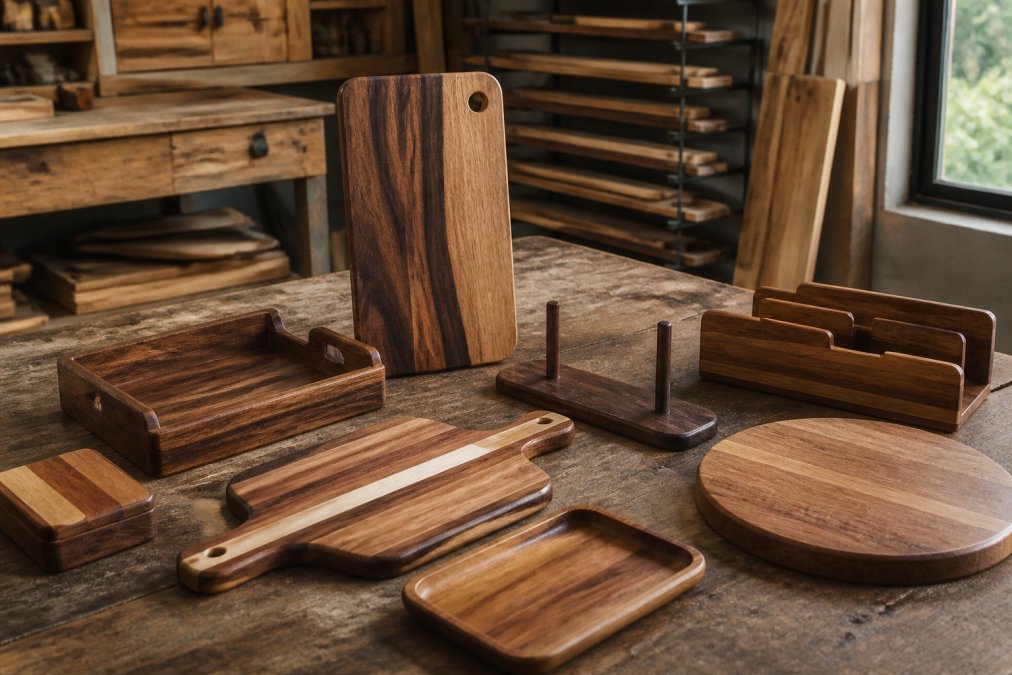
Pinnacle Woodcraft, LLC builds every custom piece using these time-tested joinery methods. Whether you're commissioning a handcrafted wooden charcuterie board, a custom valet tray, or a small furniture project, solid joinery ensures your piece will be used and enjoyed for years. Each item is built with carefully selected lumber, solid joinery, and hand-sanded finishes that highlight the natural beauty of the wood.
If you're ready to invest in furniture that lasts, email your idea and a few details to MichaelH@pinnaclewoodcraft.net. We'll work with you to create a one-of-a-kind piece built to endure.
Frequently Asked Questions
What makes solid joinery stronger than screws and nails?
Solid joinery creates interlocking wood surfaces that distribute stress across a wider area, while mechanical fasteners concentrate stress at single points. Mortise and tenon joints, for example, maximize glue surface area and allow wood to expand and contract naturally without loosening. This mechanical interlock means the joint actually becomes stronger as wood seasons, whereas screws can loosen and fasteners can corrode or fail over decades of use.
How long does solid joinery furniture typically last?
Well-crafted solid joinery furniture can last generations when properly maintained. The longevity depends on wood species, climate conditions, and care, but solid joinery's ability to accommodate wood movement means the structure remains sound through decades of expansion and contraction that would crack or separate poorly joined furniture.
Can solid joinery furniture be repaired if it gets damaged?
Yes, and this is a major advantage over mass-produced furniture. Solid joinery allows skilled woodworkers to disassemble, repair, or refinish pieces without destroying them. A loose mortise and tenon joint can be re-glued; a damaged board can be replaced; finishes can be refreshed. Mass-produced furniture with staples, particle board, and mechanical fasteners often cannot be economically repaired, making solid joinery furniture a true investment piece.
Does solid joinery cost more than other furniture construction methods?
Solid joinery requires more skilled labor and time, so initial cost is typically higher than mass-produced alternatives. However, when calculated over the furniture's lifespan, the cost per year is often lower because solid joinery pieces last decades longer and retain resale value. For custom pieces, pricing depends on wood species, complexity, and timeline. Contact Pinnacle Woodcraft for a specific quote on your project.
This article was written using GrandRanker