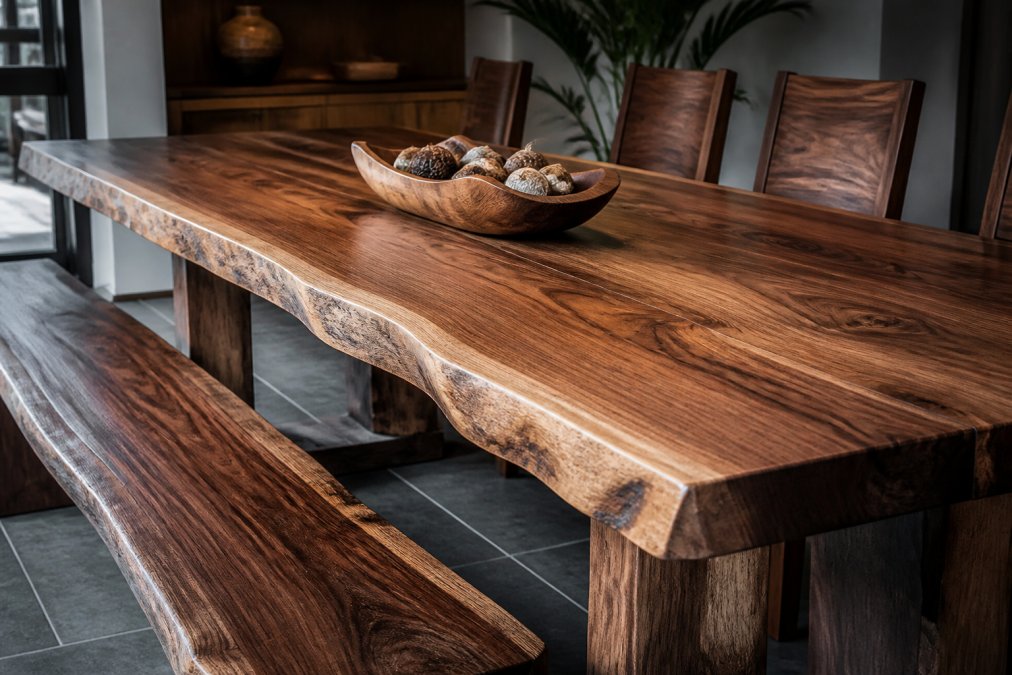
 listicle
Custom Wood Furniture Alternatives: What to Know
Table of Contents
- Custom Wood Furniture vs. Mass-Produced: The Core Difference
- How to Commission Custom Wood Furniture: The Process Explained
- Handcrafted Solid Wood Furniture Brands and Makers to Consider
- Cost of Custom Wood Furniture: What Affects Pricing
- Durability, Craftsmanship, and Heirloom Quality
- Identifying Quality Custom Wood Furniture vs. Faux Custom
- Maintenance and Long-Term Care for Custom Wood Pieces
- Conclusion
Last Updated: August 9, 2026
Custom Wood Furniture vs. Mass-Produced: The Core Difference
Custom wood furniture is handcrafted to your exact specifications using solid wood and traditional joinery, whereas mass-produced furniture relies on standardized designs, cheaper materials like particle board and MDF, and factory assembly lines. Mass-produced pieces prioritize speed and cost efficiency, using veneers over particleboard and mechanical fasteners instead of proper joinery. They look acceptable for a few years, then show wear: veneer peeling, joints loosening, finishes scratching and fading.
Custom wood furniture takes the opposite approach. A craftsperson selects specific wood species, considers grain patterns for your space, and builds joints that tighten over time rather than loosen. The finish is applied by hand in multiple coats and sealed to protect the wood for decades. This is the difference between something that functions as furniture and something that becomes an heirloom.
At Pinnacle Woodcraft, LLC, we build every piece this way: carefully selected lumber, solid joinery, hand-sanded finishes. No particleboard. No shortcuts. The result is a one-of-a-kind piece crafted to be used and enjoyed for years, not discarded when trends change. The cost difference reflects this reality, custom work takes time and skill, but what you receive is fundamentally different from what sits in a big box store.
How to Commission Custom Wood Furniture: The Process Explained
Commissioning custom wood furniture typically involves five key stages: initial consultation, design development, material selection, production, and delivery. The entire timeline usually spans 8 to 16 weeks, depending on complexity and the maker's workload.
The Consultation Phase
Start by reaching out with your vision. A general sense of what you want is enough, are you picturing a dining table, a functional piece like a valet tray, or a decorative accent? What's the style: rustic, modern, farmhouse, minimalist? A good craftsperson will ask questions about your space, lifestyle, and aesthetic to understand how you'll actually use the piece.
Design Development
Once the maker understands your needs, they'll sketch or render initial concepts. Be honest about what appeals to you and what doesn't. This is the time to iterate before any wood is cut. Many custom makers, including those at Pinnacle Woodcraft, LLC, guide you through the design process, asking the right questions to translate your vision into something buildable and beautiful.
Material Selection
You'll choose your wood species, finish, and hardware. Hardwoods like walnut, cherry, oak, and maple each have distinct grain patterns, color, and working properties. Some woods age gracefully, developing patina over time. Your maker can explain how different species will look in your space and how they'll perform. The finish, whether oil, stain, polyurethane, or wax, protects the wood and determines the final look. Matte finishes show less dust and fingerprints; glossy finishes highlight grain but require more maintenance.
Production
Your maker sources the lumber, mills it to size, cuts joinery, assembles the frame, and applies finish. Production timelines vary: a simple piece like a charcuterie board might take 3-4 weeks; a complex furniture item with multiple drawers could take 12 weeks or longer.
Delivery and Installation
Once complete, your piece is carefully packaged for shipping. Quality makers use proper materials to protect custom work during transit. Upon arrival, you'll inspect for any damage and assess the final result in your space.
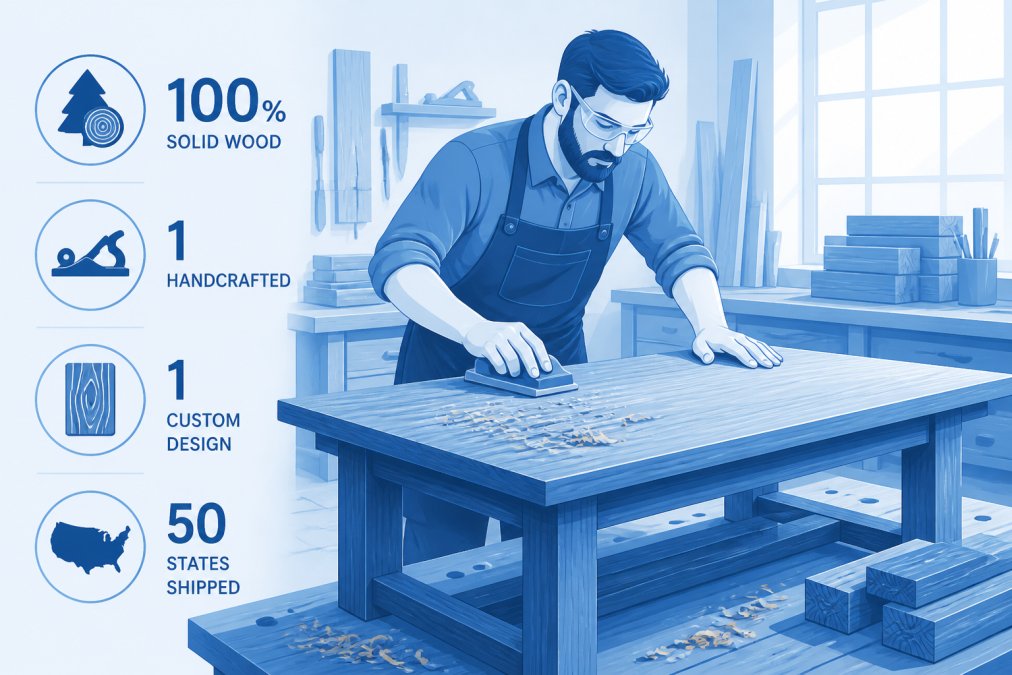
Handcrafted Solid Wood Furniture Brands and Makers to Consider
The custom furniture market includes three distinct categories: local artisans and small woodworking shops, established custom furniture studios with national reach, and online design platforms that blend digital tools with handcrafted production.
Local Artisans and Small Woodworking Shops
Local makers offer direct access to the craftsperson building your piece. You can visit the workshop, discuss your project face-to-face, and build a relationship with someone who takes pride in their work.
Pinnacle Woodcraft, LLC, based in Corpus Christi, Texas, exemplifies this category. As a family woodworking shop, they handle every aspect of the process, from lumber selection through final delivery. Their focus on traditional craftsmanship means every piece uses solid wood, proper joinery, and hand-applied finishes. They work with clients across the United States, accepting commissions for custom charcuterie boards, valet trays, and small furniture projects. The advantage is direct communication with the maker and transparency about materials and methods. Local makers typically have longer lead times because they're building your specific piece, not competing with hundreds of other orders.
Established Custom Furniture Studios
Larger custom studios operate regionally or nationally, often with showrooms and established reputations. Benchmade Modern builds American-made hardwood furniture in Dallas and Los Angeles, specializing in customizable upholstered pieces. Maiden Home, crafted in North Carolina, focuses on handmade upholstered furniture using kiln-dried hardwood frames and premium materials, emphasizing heirloom quality. Parkman Woodworks in Los Angeles specializes in custom handmade solid wood and metal furniture, often using sustainably sourced wood. These studios typically command higher prices than small makers but offer established reputations, documented processes, and sometimes warranties on their work.
Online Design Platforms for Bespoke Pieces
Pickawood offers a 3D configurator for designing solid wood furniture like wardrobes, shelving, and custom storage solutions. You specify dimensions, wood type, and finish, then see a realistic rendering before ordering. This approach appeals to people who want customization without back-and-forth consultations, though it requires you to know exactly what you want and how to measure accurately.
Cost of Custom Wood Furniture: What Affects Pricing
Custom wood furniture pricing depends on several factors: wood species, size and complexity, finish quality, hardware, and the maker's experience level.
Material costs vary significantly. Domestic hardwoods like oak and cherry cost less than exotic species like walnut or teak. Reclaimed wood commands premium prices due to scarcity and sustainability appeal. Complexity directly impacts labor time. A straightforward rectangular table takes less time than a piece with drawers, hidden compartments, or intricate joinery details. Finish quality affects both cost and longevity. A basic stain and single-coat polyurethane costs less than hand-rubbed oil finishes or multi-coat lacquer systems. Size matters, larger pieces require more lumber and labor. The maker's experience influences pricing; established studios with strong reputations typically charge more than emerging makers.
Email your idea and a few details to MichaelH@pinnaclewoodcraft.net →
Rather than guessing a budget, contact makers directly with your project details. Most will provide estimates after understanding what you want to build.
Durability, Craftsmanship, and Heirloom Quality
The hallmark of quality custom wood furniture is durability that spans decades or generations. This longevity comes from three sources: material selection, construction technique, and finish quality.
Solid wood construction is the foundation. Unlike particle board or MDF, which compress and deteriorate over time, solid wood becomes more stable as it ages. A well-built solid wood table can be refinished after 30 years and look new again. Proper joinery is where craftsmanship reveals itself. Mortise-and-tenon joints, dovetails, and other traditional techniques create connections that tighten under stress rather than loosen. A chair with properly cut joinery will still be sturdy after 50 years of use. Hand-applied finishes protect the wood and showcase its beauty. A craftsperson applies stain or dye to enhance grain, then layers protective coatings by hand, allowing them to adjust for grain variation and ensure even coverage.
The result is a piece with heirloom potential. It can be passed down, refinished, repaired, and enjoyed by multiple generations. This is the opposite of disposable furniture.
Identifying Quality Custom Wood Furniture vs. Faux Custom
Not all furniture marketed as "custom" is truly handcrafted. Some makers use the term loosely, offering limited customization of mass-produced designs.
Red flags for faux custom:
Extremely fast turnarounds suggest corners are being cut. Particle board or MDF components, even if the exterior is solid wood veneer, indicate mass production. Vague descriptions of construction suggest outsourced production or shortcuts. Generic designs with minor customization start from a template, not your vision. Stock photos instead of actual completed work indicate a lack of real portfolio.
Signs of genuine quality:
The maker can describe their process in detail, wood selection, milling, joinery, finishing, timeline. They ask detailed questions about your space, lifestyle, and aesthetic before proposing a design. They have a portfolio of completed work with client photos. They're transparent about materials and explain why they chose them. They have a documented, organized process.
Maintenance and Long-Term Care for Custom Wood Pieces
Custom wood furniture requires care, but not complicated care. The goal is to protect the finish and keep the wood stable.
Regular cleaning is straightforward. Use a soft, dry cloth to remove dust. For deeper cleaning, dampen the cloth slightly with water or a mild wood cleaner. Avoid harsh chemicals or excessive moisture. Protect from extremes. Wood expands and contracts with humidity and temperature changes. Keep furniture away from direct sunlight, heat sources, and areas with high humidity. In dry climates, a humidifier helps prevent wood from becoming brittle. Address spills immediately. Water, wine, or other liquids can damage finishes or stain wood. Refinishing when needed. Over years of use, finishes wear and scratches appear. A quality custom piece can be refinished, sanded down and recoated with new stain or finish. This process restores the wood's appearance and extends its life indefinitely. Minor repairs like small scratches can be touched up with stain or finish markers, and loose joints can be tightened.

The investment in proper care is minimal compared to the piece's longevity. A custom wood table maintained well can serve multiple generations.
Conclusion
Custom wood furniture represents a different philosophy than mass production. It's about receiving a one-of-a-kind piece built with traditional craftsmanship, carefully selected lumber, solid joinery, and hand-sanded finishes, rather than settling for generic items designed for quick replacement. The process takes time, requires clear communication with a maker, and costs more upfront. But what you get is distinctive, practical, and made with a level of care that's becoming harder to find.
If you're ready to commission a custom piece, start by identifying makers whose work resonates with your aesthetic. Ask about their process, materials, and timeline. Be clear about your vision and budget. Understand that you're investing in something designed to be used and enjoyed for years, not discarded when it shows wear.
Pinnacle Woodcraft, LLC specializes in turning your unique vision into handcrafted wooden pieces using solid wood, proper joinery, and traditional finishing techniques. Whether you need a custom charcuterie board, valet tray, or small furniture project, they work directly with clients across the United States to create pieces that carry personality and soften a room. Email your idea and a few details to MichaelH@pinnaclewoodcraft.net to start the conversation.
| Consideration | What It Means | Why It Matters |
|---|---|---|
| Solid Wood Construction | Frame and major components built from solid hardwood, not particle board or MDF | Provides durability and stability that lasts decades; can be refinished multiple times |
| Proper Joinery | Mortise-and-tenon, dovetail, and other traditional techniques | Creates connections that tighten under stress; resists loosening over years of use |
| Hand-Applied Finishes | Stain, dye, and protective coatings applied by hand in multiple layers | Showcases wood grain; provides superior protection; allows adjustment for material variation |
| Customization Options | Design tailored to your specific dimensions, style, and functional needs | Ensures the piece fits your space and aesthetic; eliminates generic compromise |
| Maker Transparency | Clear explanation of materials, process, and timeline | Indicates genuine craftsmanship; allows you to assess quality before committing |
| Portfolio of Completed Work | Real photos of pieces the maker has built for actual clients | Demonstrates skill and helps you envision your finished piece in a real home |
Frequently Asked Questions
What is the difference between custom wood furniture and mass-produced pieces?
Custom wood furniture is built by hand using solid wood, carefully selected hardwood species, and solid joinery techniques. Mass-produced furniture often relies on particle board, MDF, and veneer to reduce costs and production time. Custom pieces are designed to your specifications, built to last for decades, and showcase the natural grain and character of the wood. Mass-produced furniture prioritizes speed and affordability, resulting in pieces that typically need replacement within 5-10 years.
How do I commission custom wood furniture from an artisan?
Start by contacting a local woodworking shop or artisan with examples of your vision, photos, style descriptions, or rough dimensions help. Many makers offer free consultations to discuss your project, timeline, and budget. You'll collaborate on design details like wood species, dimensions, finish, and joinery. Once you agree on the design and timeline, you'll typically provide a deposit, and the artisan will begin the build. The process from consultation to delivery usually takes 4-12 weeks, depending on complexity and current workload.
Is custom-made wood furniture worth the investment?
Yes, if you prioritize durability and uniqueness. Custom wood furniture built with solid joinery and quality hardwood can last 50+ years or more with proper care, making the per-year cost competitive with mass-produced alternatives that need replacement every decade. Each piece is one-of-a-kind, tailored to your space and aesthetic, and carries the character of handcraftsmanship. For pieces you'll use daily, tables, chairs, storage, the investment pays off in longevity and personal satisfaction.
What factors affect the cost of custom wood furniture?
Pricing depends on wood species (hardwoods like walnut and oak cost more than softwoods), dimensions and complexity, joinery method (hand-cut joints cost more than simple assembly), finish type, and the maker's experience level. Larger pieces and intricate designs require more labor and materials. Lead time also influences cost, rush orders may incur premiums. For accurate pricing, contact a maker with details about your project, dimensions, and desired wood species.
How can I tell if a piece is truly handcrafted or just labeled 'custom'?
Ask the maker to show their workshop, process photos, or provide references from past clients. True handcrafted pieces show evidence of hand-sanding (subtle surface variations), visible wood grain and natural character, solid joinery (no particle board or veneer), and maker's marks or signatures. Request information about wood species, finish type, and construction methods. Faux custom pieces often use MDF cores, veneer surfaces, or assembly-line construction despite being marketed as bespoke. Legitimate makers are transparent about their process and materials.
This article was written using GrandRanker